

Views: 0 Author: Site Editor Publish Time: 2026-10-30 Origin: Site


Unexplained high utility bills, renovating an older property, or building a brand-new home often force property owners to evaluate a critical plumbing component. Whether tracking specific fluid usage for a sprawling backyard garden, splitting utility costs in a multi-tenant duplex, or diagnosing sudden expense spikes, selecting the appropriate measurement instrument acts as your first line of defense.
Choosing a Home Water Meter requires precise hydraulic matching. Specifying an incorrect diameter, selecting a mismatched internal mechanism, or utilizing inappropriate housing materials will inevitably skew billing data. Furthermore, mismatched equipment creates severe hydraulic bottlenecks across your plumbing network and accelerates premature device failure. This technical guide explores the nuances and practical realities of fluid measurement, providing the engineering insights needed to make a highly informed purchasing decision.
Key Takeaways
Hydraulic Sizing is Crucial: Matching the measurement device to the main pipe diameter and peak flow rate ensures pinpoint accuracy while maintaining robust system pressure.
Understand the Mechanisms: Different hydraulic environments demand specific technologies. A positive displacement gauge offers extreme precision for low flows, while a velocity-based unit effortlessly handles grit and fluctuating flow rates.
Smart Upgrades Mitigate Risk: Modern infrastructure utilizing advanced radio technology tracks consumption in real-time, identifying destructive leaks long before structural rot occurs.
Material Certifications Matter: Verifying potable drinking water safety is mandatory. Always specify equipment meeting lead-free compliance standards such as NSF/ANSI 61.
At its core, a utility gauge is a highly specialized mechanical or solid-state device engineered to record the exact volume of fluid delivered to a property. Public municipal suppliers typically install these instruments at the property line. Alternatively, private homeowners utilize them to manage independent well systems or sub-meter specific zones across their acreage.
Understanding the underlying mechanics of your utility gauge proves essential for several practical reasons. First and foremost is equitable billing. Utilities charge based on volumetric consumption. A meticulously calibrated device ensures you pay exclusively for the exact volume your household consumes.
In addition, these devices serve as incredible diagnostic tools. Imagine returning from a two-week vacation to discover a flooded basement. A sudden, unexplained spike in your reading serves as the earliest empirical indicator of a hidden plumbing catastrophe, such as a fractured subterranean pipe or a silently running toilet flapper. For environmentally conscious families, establishing a baseline reading provides the actionable data required to implement aggressive conservation strategies.
The global landscape of fluid resource management is undergoing a massive technological shift. Driven by escalating water scarcity and stringent regulatory frameworks, the industry is rapidly moving away from basic mechanical tracking toward highly precise, data-driven ecosystems. Municipalities and private developers alike are prioritizing extreme low-flow sensitivity to combat non-revenue water loss.
Specifically, we are witnessing a surge in demand for high-accuracy volumetric instruments boasting R160 and R200 measurement classes. These rigorous standards guarantee that even the slightest micro-leak is captured and recorded. Simultaneously, environmental regulations are driving a universal transition toward engineered polymers and lead-free brass alloys, ensuring absolute compliance with global drinking water safety mandates. Staying informed about these macro-trends empowers property owners to invest in future-proof technology rather than obsolete hardware.
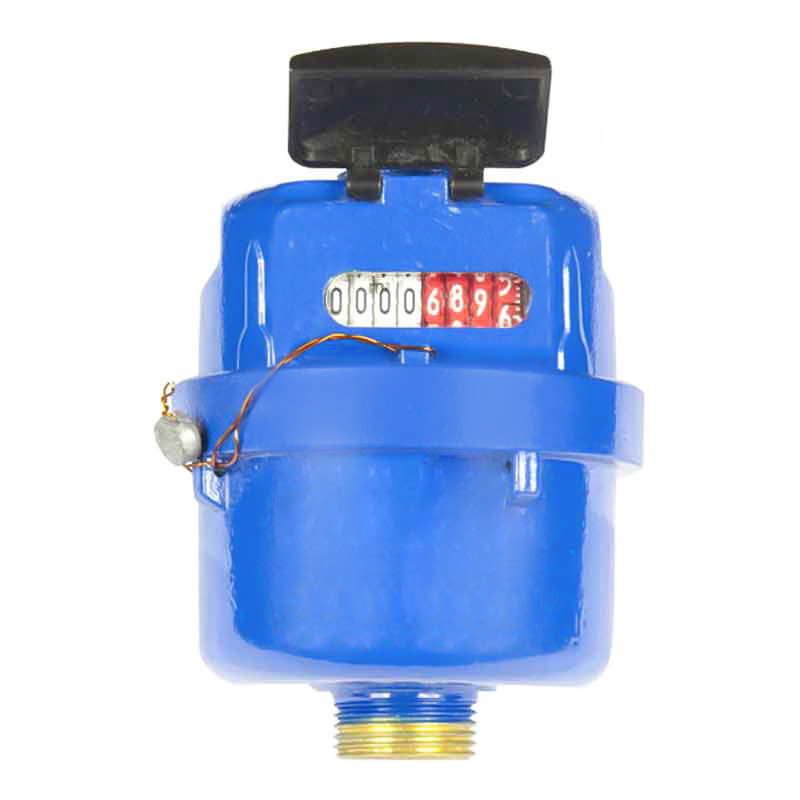
Selecting the optimal measurement technology requires a foundational understanding of how different instruments calculate fluid volume. The internal mechanics dictate the unit's accuracy curve, operational longevity, and ideal installation environment. Below is a core comparison of the primary technologies available today.
Meter Type | Measurement Principle | Best Application | Accuracy Level | Particulate Tolerance |
|---|---|---|---|---|
Rotary Piston | Positive Displacement | Indoor residential, low-flow leak detection | Extremely High, Class C / R160-R200 | Low |
Multi-jet | Velocity / Kinetic Energy | Outdoor, well systems, fluctuating flows | High, Class B | Moderate to High |
Ultrasonic | Transit-time Sound Waves | Smart homes, commercial integrations | Extremely High | High |
Positive displacement meters represent the industry standard for indoor domestic applications. They calculate volume by repeatedly filling and emptying a highly calibrated internal chamber of a known, fixed capacity. Because they measure discrete physical pockets of fluid, their precision remains unmatched.
The Piston Water Meter stands out as the premier example within this category. Operating via an oscillating piston mechanism housed inside a cylindrical measuring chamber, each complete rotation corresponds to a specific volume. Modern rotary piston designs, such as the widely respected LXH-15A to 20A series, comply strictly with ISO 4064 standards. These units feature an impressive R160 to R200 accuracy range and utilize a liquid-sealed register to keep the dial permanently clear. Their standout advantage is extreme sensitivity at very low flow rates, making them an invaluable asset for detecting micro-leaks.
In contrast to measuring fixed physical volumes, velocity meters calculate total consumption by evaluating the speed of the fluid rushing through a pipe of a known internal diameter. The kinetic energy spins an internal rotor or impeller, which mathematically translates into a volume reading on the dial.
A highly durable example is the Multi-jet Water Meter. Fluid enters the chamber through multiple strategically placed ports, creating balanced jets that strike the impeller evenly. This multi-directional impact minimizes uneven wear on the internal bearings. Because the mechanism allows small particulates to pass through without jamming, engineers frequently deploy them in homes utilizing untreated well water or agricultural sub-metering setups.
Representing the cutting edge of fluid measurement, electromagnetic and ultrasonic units are solid-state devices completely devoid of moving parts. They utilize Faraday's Law of Induction or high-frequency transit-time sound waves to calculate fluid velocity. While these maintenance-free units offer pinpoint accuracy and immunity to physical wear, their elevated manufacturing costs generally reserve them for complex commercial applications.
Utility providers are rapidly transitioning from traditional mechanical grids to Advanced Metering Infrastructure. While this macro-trend dominates city planning, individual homeowners must weigh upfront costs against data accessibility when specifying their own equipment.
Traditional mechanical units rely entirely on physical kinetic energy. The movement of the internal piston or impeller magnetically couples to an odometer-style register. They are incredibly cost-effective, boast decades of proven field reliability, and require no external power source. However, they demand manual on-site reading and cannot actively alert you to a sudden pipe burst.
Conversely, a smart Residential Water Meter integrates traditional measuring chambers with advanced digital transmitters. Utilizing automated radio signals, these units empower users with granular, real-time consumption data synced directly to a smartphone application. They trigger automated push notifications if continuous, unnatural flow is detected over a 24-hour period. The trade-off involves a higher initial capital investment and a finite lithium battery lifespan.
Selecting the appropriate size represents the most critical technical hurdle. A unit must meticulously match both the physical infrastructure of the property and the behavioral demands of its occupants.
The physical connections of your new device must correspond seamlessly to the diameter of the main service line entering your foundation. Standard single-family residences typically utilize DN15 15mm or DN20 20mm service lines. Arbitrary sizing leads to systemic failure. Oversizing a unit results in a failure to register low-flow events. Undersizing creates a severe bottleneck, resulting in an unacceptable pressure drop across the plumbing system.
To guarantee optimal performance, engineers calculate the peak flow rate using Gallons Per Minute, or GPM. A practical approach involves aggregating the flow rates of all domestic fixtures. If a modern showerhead draws 2.0 GPM, a dishwasher uses 1.5 GPM, and a washing machine draws 3.0 GPM, a home running concurrent high-capacity appliances dictates a larger bore size to prevent pressure starvation.
When browsing supply catalogs, buyers frequently encounter the designation 5/8 by 3/4. This industry-standard nomenclature simply means the internal measuring chamber is sized at 5/8 of an inch, providing exceptional accuracy for standard domestic flow rates. Meanwhile, the external threaded connection spuds are sized at 3/4 of an inch to easily mate with modern plumbing lines.
Beyond basic sizing and internal mechanisms, engineers must evaluate material variables to ensure regulatory compliance and long-term durability.
Traditionally, main bodies were cast from heavy-duty bronze or brass alloys. Today, high-quality brass remains a staple for high-pressure environments, while advanced polymer and composite plastic bodies dominate the residential sub-metering market. Engineered plastics offer high cost-effectiveness, complete immunity to galvanic pipe corrosion, and are inherently free of heavy metals.
Because these instruments sit directly in the path of your household drinking supply, material safety remains absolutely non-negotiable. Buyers must verify that the equipment carries rigorous lead-free certifications. Specifically, look for NSF/ANSI Standard 61, which evaluates the health effects of fluid contact materials.
While the municipal utility dictates the primary billing device, property owners frequently purchase secondary units for localized tracking.
In duplexes or townhomes sharing a single utility connection, landlords routinely install secondary sub-meters on the individual plumbing branches. This localized approach allows the property owner to measure exact consumption per unit, ensuring fair, usage-based billing.
Furthermore, many municipalities base their monthly sewer charges on the volume recorded by the main household unit, assuming all drawn fluid goes down the drain. Fluid used for outdoor landscaping never enters the municipal sewer system. Resourceful homeowners install a secondary deduct meter specifically for their irrigation lines. The utility uses this reading to subtract the outdoor volume from the sewer bill, resulting in substantial financial savings.
Empowering yourself to manually read your dial serves as the primary defense against plumbing disasters and inflated utility bills.
Most mechanical units feature a straightforward odometer-style display. The stationary numbers printed on the dial face represent the total historical volume that has passed through the property. The most critical feature on the dial face is the low-flow indicator. Typically shaped like a small gear wheel or triangle, this highly geared component spins visibly even when the smallest volume moves through the chamber.
To empirically verify the integrity of your home's plumbing, perform the standardized 15-minute leak test. First, ensure all water-consuming appliances are completely turned off. Next, verify that all indoor and outdoor faucets are tightly shut. Locate your utility gauge and observe the low-flow indicator. If the indicator actively spins, an active leak is present. If it appears still, write down the exact odometer numbers, wait 15 minutes, and check again. Any advancement in the numbers confirms a slow, hidden leak requiring immediate maintenance.
Proper installation geometry and routine maintenance are imperative to ensure a unit maintains its calibrated accuracy over its operational lifespan.
Replacing or tampering with the primary municipal utility line is strictly prohibited and must be handled by city personnel. However, splicing in a secondary sub-meter for a garden is generally permissible for a licensed private plumber. Always consult local municipal plumbing codes before cutting into pressurized lines.
The physical orientation of the pipe heavily dictates your selection. A Volumetric Water Meter, due to its internal positive displacement mechanics, maintains strict accuracy whether installed horizontally, vertically, or on an incline. Conversely, velocity-based units often require a strictly horizontal installation to ensure the internal impeller balances correctly.
Homeowners should conduct visual inspections bi-annually. Keep the surrounding area clear of organic debris and soil. For equipment located in unheated spaces, apply high-quality foam pipe insulation to prevent internal freezing, which permanently ruptures brass housings.
Investing in the correct measurement technology guarantees fair utility billing and actively protects your property from devastating fluid damage. By understanding your pipe diameter, calculating your peak flow demands, and choosing the appropriate mechanical technology, you take total control of your household's resource consumption. If you are preparing for a new installation or upgrading an existing network, explore professional-grade solutions. Visit China Watermeter to discover a comprehensive range of high-precision piston and multi-jet instruments engineered to meet the exact hydraulic demands of your property.
Most mechanical units have a highly functional lifespan ranging from 10 to 15 years. Over time, internal moving parts experience friction and naturally wear down. This degradation usually causes the mechanism to under-register, meaning it will read slightly less than actual flow. For smart systems, internal lithium batteries typically dictate a lifespan of 10 to 20 years before the electronic head requires replacement.
Generally, no. The municipal utility company dictates strict specifications for the primary utility gauge to ensure seamless compatibility with their overarching billing network. However, property owners possess complete freedom when choosing equipment for private sub-metering, such as monitoring consumption for basement tenants or smart irrigation systems.
A piston-based instrument utilizes a volumetric displacement method, capturing fixed physical volumes of fluid in a chamber. This engineered design makes it highly precise for low-flow situations, such as detecting dripping faucets. A multi-jet unit calculates volume based on fluid velocity pushing an internal impeller. It is significantly more robust and better suited for handling fluid laden with small sand particulates or managing rapidly fluctuating flow rates.
A sudden, abnormally high reading is rarely caused by a defective gauge, as mechanical devices tend to slow down and under-register as they age. A skyrocketing reading almost always indicates either a temporary change in household habits or a hidden plumbing leak. Common culprits include a silently running toilet flapper valve or a fractured underground irrigation line.
A standard four-bedroom home with three bathrooms typically requires a 3/4-inch or 20mm meter. This bore size comfortably handles the concurrent flow demands of multiple showers, washing machines, and dishwashers without causing a noticeable pressure drop across the internal plumbing network.
The primary meter located at the street or property line falls under the jurisdiction of the local municipal utility company, making them legally responsible for repairs and replacements. Conversely, any secondary sub-meters installed privately for irrigation or tenant billing remain the strict financial and maintenance responsibility of the property owner.
