

Views: 0 Author: Site Editor Publish Time: 2026-10-27 Origin: Site


Are you staring at your monthly utility bill, wondering how a standard household could possibly consume that much water? As global utility costs rise, homeowners face mounting pressure to manage their domestic plumbing systems efficiently. Without an accurate tracking mechanism, households frequently fall victim to undetected subterranean leaks, imprecise flat-rate billing, and unnecessary resource depletion.
The primary solution to these common challenges is the installation of a high-quality Residential Water Meter. This essential volumetric tracker provides verifiable, real-time data regarding daily consumption. By establishing an empirical link between the water flowing from your taps and your monthly expenses, it enables precise management. This article examines the fundamental importance of these measurement devices. We will explore distinct mechanical differences between various models and provide objective criteria for selecting the appropriate unit for your property.
Accurate Billing: A properly calibrated measurement device ensures financial accountability by charging consumers only for their actual volumetric usage, eliminating unfair flat-rate estimates.
Leak Detection: Continuous mechanical monitoring facilitates the early identification of hidden plumbing failures, mitigating potential property damage and resource waste.
Eco-Friendly Operations: Analyzing consumption data promotes sustainable habits, fundamentally reducing the overall environmental impact of residential water usage.
Variety of Options: Distinguishing between different internal mechanisms helps homeowners make informed purchasing decisions based on their specific environmental conditions.
From an engineering standpoint, modern household water management is rapidly evolving. Recent industry analyses highlight a significant shift toward data-driven domestic infrastructure. With climate change exacerbating regional droughts, regulatory bodies are increasingly abandoning outdated estimation methods. Instead, they mandate high-precision volumetric tracking.
This structural shift curbs non-revenue water loss for municipalities. It also empowers consumers with actionable usage data. Today’s advanced measurement devices are no longer just passive brass dials. They form the frontline of global sustainability initiatives, integrating robust mechanical engineering with modern conservation goals.
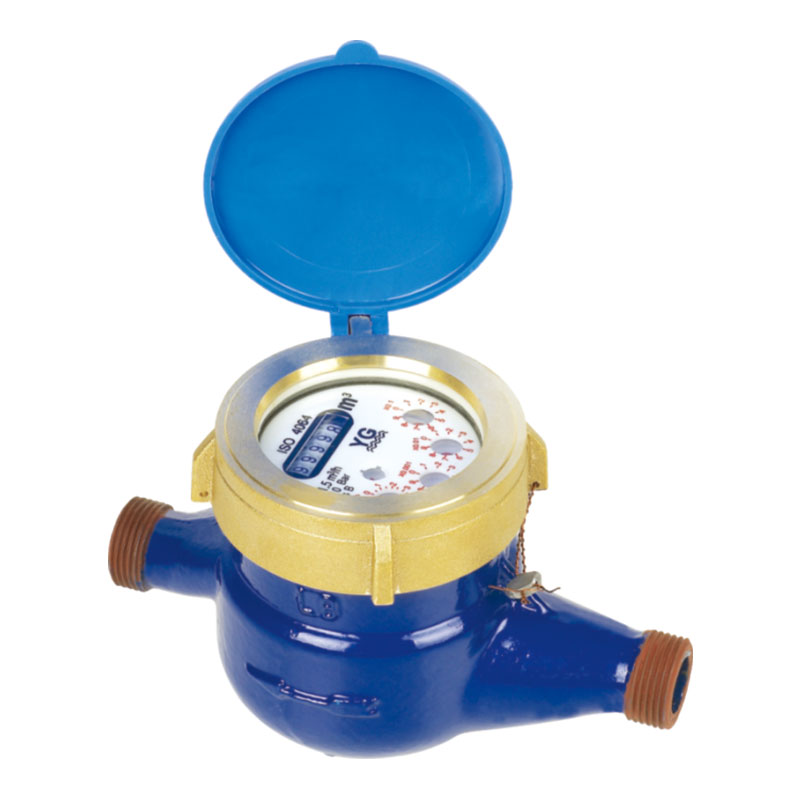
A residential flow monitor is a precision measurement instrument. Plumbers typically install it directly on the main municipal service line entering a property. Its core function is strictly recording the total volume of water passing through the pipes. In practical terms, this device acts as both the financial cash register for utility providers and a critical diagnostic baseline for the property owner.
By continuously measuring flow rates, these utility instruments provide empirical data that replaces guesswork. Historically, many regions relied on unmetered, flat-rate billing. That approach offered absolutely no incentive for conservation and often led to systemic inefficiencies. Whether your home utilizes standard municipal supply or a private well system, the meter serves as the definitive source of truth for all diagnostics.
In communities operating without individual meters, utility providers typically assess fees based on property size, fixture counts, or historical neighborhood averages. This flat-rate methodology often forces households with conservative habits to subsidize the excessive consumption of their neighbors. A properly functioning meter completely eliminates this financial inequity. By measuring the exact cubic meters or gallons consumed, the device ensures that utility billing is strictly usage-based. This empirical approach guarantees fair financial transactions between the homeowner and the municipality.
Plumbing leaks often occur within dark wall cavities, underground service lines, or subterranean crawlspaces. This makes visual detection nearly impossible until significant structural rotting or foundation damage has already occurred. A household meter provides a reliable, non-invasive method for identifying these issues early. Most modern units feature a low-flow indicator. This is often a small triangular dial or a spinning star that registers even the slightest water movement. If this indicator moves while all domestic fixtures are closed, it provides immediate, objective evidence of a systemic leak.
Behavioral economics suggests that individuals actively modify their consumption habits when presented with clear, actionable data. When families can review their weekly usage statistics, they are significantly more likely to implement conservation strategies. Simple actions, such as reducing shower durations, installing low-flow aerators, or promptly repairing a dripping kitchen faucet, become measurable achievements. The psychological impact of seeing consumption translated into specific numerical values effectively bridges the gap between abstract environmental awareness and practical household action.
As environmental regulations become more stringent, many local municipalities now mandate the installation of specific metering technologies for all residential properties. Maintaining an updated, highly accurate meter ensures compliance with local building codes, preventing potential legal fines or service interruptions. Furthermore, prospective homebuyers increasingly prioritize resource efficiency. A modern, well-maintained metering system signals to buyers that the property's plumbing infrastructure has been proactively managed.
Selecting the correct metering technology requires a nuanced understanding of fluid dynamics and mechanical principles. Each type addresses specific flow conditions, water quality issues, and environmental challenges. Integrating real product specifications helps clarify these differences.
This design is widely recognized for sustained accuracy across a broad spectrum of flow conditions. The mechanism directs incoming water through multiple internal ports. These ports divide the water stream, directing multiple jets evenly against an internal impeller. Because the physical load is evenly distributed, a Multi-jet Water Meter maintains strict measurement tolerances over an extended operational lifespan. Imagine turning on your bathroom faucet to a mere trickle while shaving. This balanced hydrodynamic distribution ensures even that minimal, low-velocity flow is accurately logged.
Environmental factors can severely degrade standard meters over time. To combat this, specific models encapsulate the entire registering mechanism within a hermetically sealed chamber filled with a proprietary clear liquid. For instance, the LXSY-15E to 50E series utilizes this exact liquid-sealed technology. This liquid barrier prevents untreated water, suspended particulate matter, and internal condensation from interacting with the dial. Consequently, a Liquid Sealed Water Meter remains perfectly legible over decades of use.
Often classified as a single-jet or velocity meter, this represents one of the most established technologies. Water enters the primary chamber through a single inlet port, striking a rotating vane to measure volumetric flow. The simplicity of a Rotary Vane Water Meter makes it highly cost-effective to manufacture and incredibly easy to maintain for baseline residential setups.
When deciding between internal mechanisms, property managers must evaluate specific operational environments. Multi-jet models excel in homes with fluctuating flow rates. Their balanced impeller design drastically reduces friction and long-term mechanical degradation. In contrast, standard single-jet models offer a simplified solution for properties with highly stable, predictable water demand.
Feature | Multi-jet Mechanism | Single-Jet Rotary Mechanism |
|---|---|---|
Internal Mechanism | Multiple inlet ports direct water evenly at the impeller. | A single port directs water at the rotating vane. |
Flow Sensitivity | Exceptionally high accuracy at both peak and micro-flow rates. | Reliable at standard flows; slightly less sensitive to minor drips. |
Wear and Tear | Distributed hydrodynamic load minimizes bearing wear over time. | Single-sided pressure can cause faster mechanical wear over a decade. |
Best Application | Homes with highly variable usage requiring strict precision. | Standard residential setups prioritizing a cost-effective baseline installation. |
If your local municipal supply delivers hard water with high mineral content, the intricate ports of a multi-jet design may require occasional maintenance to prevent scaling. However, for the vast majority of modern homes, the superior low-flow accuracy of a multi-jet system outweighs the simplicity of a standard rotary vane unit, ensuring that every drop is accounted for.
Certain geographical and architectural conditions necessitate specialized equipment. Picture a meter pit buried in a damp, flood-prone front yard. Or consider a basement utility room subject to extreme temperature fluctuations. In these scenarios, standard dry-dial registers often fail due to internal fogging.
The register of a specialized unit is encased in a protective glycerin mixture. This makes it entirely immune to condensation and micro-debris intrusion. This technology is particularly crucial in rural regions utilizing well water, where iron and sediment deposits typically obscure standard glass dials. By utilizing a liquid-sealed unit, homeowners guarantee their critical consumption data remains visible and accurate, regardless of the harsh external environment.
Even the most robust mechanical devices eventually experience performance degradation. Identifying the early warning signs of mechanical failure empowers homeowners to replace the unit before it causes billing disputes or localized flooding.
Unexplained utility bill spikes: If your monthly costs increase dramatically without a corresponding change in household habits, the internal calibration of the device has likely failed.
Unreadable or compromised dials: If the glass is heavily scratched, permanently fogged by condensation, or stained by mineral deposits, visual verification becomes impossible.
Exceeding the operational lifespan: Most mechanical residential units are engineered for a 10 to 15-year lifecycle. Beyond this timeframe, internal bearings inevitably wear down.
Noticeable drops in home water pressure: A failing internal impeller or a heavily scaled inlet port can significantly restrict the flow of water entering your home's plumbing system.
Continuous dial spinning: If the low-flow indicator continues to move when all internal and external fixtures are completely shut off, you either have a severe hidden leak or a critical malfunction within the registering mechanism.
Proactive maintenance extends the operational life of your equipment. Implementing standard care protocols prevents premature mechanical failure and ensures ongoing accuracy.
Winterizing the installation site is absolutely critical in colder climates. Before the first winter frost, wrap exposed pipes and the meter casing in specialized foam sleeves or thermostatically controlled heat tape. When water freezes, it expands violently. This expansion can easily fracture a brass casing and cause catastrophic basement flooding.
Maintaining clear physical access is equally important. Keep the surrounding area free of overgrown vegetation or stacked storage boxes. This allows emergency plumbers to perform routine inspections or shut off the main valve without dangerous delays.
Finally, conduct a brief visual inspection on a monthly basis. Checking the dial for unexpected movement helps identify anomalies before they require expensive professional intervention.
A residential measurement device is far more than a simple billing instrument. It is the foundational component of modern household water management. Accurate, real-time data protects homeowners from the financial drain of undetected leaks and unfair flat-rate billing, all while promoting sustainable daily habits.
Choosing the right technology yields significant long-term savings. You must evaluate your specific plumbing environment carefully. Determine whether your property requires the balanced precision of a multi-jet design, the rugged environmental resistance of a liquid-sealed unit, or the straightforward reliability of a traditional rotary vane model.
Take a moment today to locate and inspect your current unit. If it shows signs of age, fogging, or erratic behavior, it is time for an upgrade. Visit China Water Meter to explore a comprehensive range of professional-grade measurement solutions tailored to your specific household needs. Investing in accurate volumetric tracking is a definitive step toward a more sustainable and economically efficient home.
Responsibility generally depends on specific local municipal regulations. In most jurisdictions, the public utility company owns, calibrates, and maintains the physical meter. However, the homeowner is strictly responsible for the structural integrity of the pipes leading to and from the device. In scenarios involving private sub-metering for multi-family units or private well systems, the property owner assumes full financial and mechanical responsibility for the unit's replacement and ongoing maintenance.
Empirical data indicates that most mechanical units maintain their optimal accuracy for a period of 10 to 15 years. After this operational window, the constant friction of water against the internal moving parts causes physical wear. This degradation usually results in the meter under-registering the actual volume of water consumed, prompting utility companies to initiate standardized replacement programs to ensure ongoing billing accuracy.
The primary mechanical advantage is its ability to maintain strict measurement accuracy over an extended period, even in fluctuating flow conditions. Because the incoming water stream is divided into multiple jets, the hydrodynamic force is distributed evenly across the internal impeller. This balanced design significantly reduces physical wear on the central shaft and bearings, ensuring highly reliable performance when measuring both high volumes and very low flow rates.
Yes, a malfunctioning unit can occasionally result in inflated utility charges. While it is mechanically more common for aging meters to slow down and under-register consumption due to friction, certain internal failures can cause erratic reading spikes. More frequently, however, a sudden, shocking increase in the bill is the result of a hidden plumbing leak that the meter is accurately detecting, rather than a failure of the meter itself.
To check for leaks, first ensure that all water fixtures, appliances, and irrigation systems inside and outside your home are completely turned off. Locate your meter and look for the low-flow indicator, which is usually a small red triangle or a spinning star gear on the dial face. If this indicator is moving while no water is intentionally being used, you have an active leak somewhere in your plumbing system.
Standard household water pressure generally does not impact the accuracy of a high-quality volumetric tracker. These mechanical devices are engineered to measure the physical volume of water passing through the chamber, regardless of the pressure driving it. However, extreme pressure spikes can cause premature wear on internal bearings, which may eventually lead to mechanical degradation and under-registration over several years.
