

Views: 0 Author: Site Editor Publish Time: 2026-08-15 Origin: Site


Legacy water tracking creates massive operational headaches for facility managers and property owners. You constantly battle unbilled water and non-revenue losses. Undetected leaks damage property and inflate utility expenses. Manual reading errors frustrate tenants and complicate billing cycles. Upgrading this infrastructure presents a complex challenge. Decision-makers face a fragmented market of measurement technologies and transmission protocols. Software ecosystems and competing manufacturers add to the confusion. It becomes difficult to align hardware capabilities with specific project requirements. Multi-tenant billing requires different features than industrial monitoring or municipal utility management. We need a structured evaluation framework to sort through these choices. This guide helps engineers and property owners assess these technologies effectively. You will learn to evaluate accuracy, integration capabilities, and vendor reliability to ensure a successful deployment. We focus on practical field applications rather than theoretical specifications.
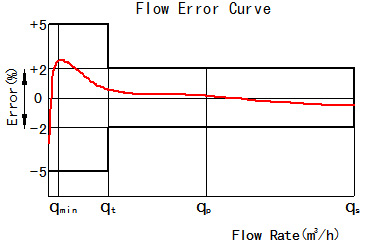
Measurement Technology Dictates Accuracy: Solid-state meters (ultrasonic and electromagnetic) offer superior low-flow accuracy and longevity compared to traditional mechanical meters, though at a higher initial cost.
Connectivity is the Bottleneck: Selecting the right transmission protocol (LoRaWAN, NB-IoT, LTE-M, or proprietary RF) is critical and must be dictated by the installation environment (e.g., deep basements, concrete vaults) and data frequency needs.
Software Integration Over Hardware Specs: A commercial smart water meter is only as effective as its ability to integrate with existing Building Management Systems (BMS) or tenant billing software via open APIs.
Long-Term Expenses Exceed Unit Price: Evaluation must factor in battery lifespan (typically 10-15 years), software subscription fees, manufacturer warranties, and the labor costs of installation and future maintenance.
Establish baseline requirements before looking at hardware specifications. Framing the problem correctly prevents costly procurement mistakes. You must understand exactly what you need the system to achieve. A clear set of success criteria guides every subsequent technical decision. It ensures the final installation actually solves your operational headaches.
Review your current utility bills and existing meter numbers. Establish baseline usage data to set clear performance goals. This audit helps identify the specific pain points of your current setup. Document the pipe materials, sizes, and general condition in your mechanical rooms. Note any existing pressure issues or frequent maintenance zones. Understanding your starting point makes it easier to measure the success of the new deployment. Walk the site with your lead plumber. Look at the physical space around the existing pipes. Measure the face-to-face dimensions of the old hardware.
Determine if you are integrating submeters into existing plumbing or specifying for a new build. Retrofits often require compact, inline designs due to severe space limitations. You typically rely on battery power because running new electrical conduit is impractical. New construction offers much more flexibility. You can design ideal pipe layouts with adequate straight runs. You can also specify hardwiring for continuous power delivery. Retrofitting old cast iron pipes requires different flange adapters than new copper or PEX lines.
Differentiate your requirements based on the primary application. Utility-scale deployments prioritize long-range connectivity and rugged outdoor durability. Commercial multi-tenant submetering focuses on billing accuracy and tenant data access. Industrial process monitoring requires high-frequency data and extreme chemical resistance. Identifying the primary use case narrows down the hardware options significantly. A cooling tower make-up line needs different specifications than a residential apartment branch line.
Define how often you need to collect and analyze consumption data. Hourly data helps detect leaks quickly and prevents catastrophic water damage. Daily data suffices for standard tenant billing and general usage tracking. Real-time data supports critical industrial process control and automated shut-off systems. Higher data granularity demands more robust connectivity and depletes batteries faster. Do not pay for minute-by-minute data if you only check the dashboard once a month.
Verify local compliance requirements before selecting any hardware. Look for AWWA standards to ensure mechanical reliability and accuracy. Demand NSF/ANSI 61 certification if the device touches potable drinking water. Require NTEP certification if you plan to use the data for legal tenant billing. Failing to meet these standards can result in fines and forced hardware replacements. Building inspectors will check these certifications during the final sign-off.
The physical mechanism used to measure flow dictates the accuracy and lifespan of the device. Different technologies excel in different environments. You must match the measurement principle to your specific water quality and flow profile.
Mechanical meters rely on physical movement to translate fluid velocity into a measurable volume. Water flows through a chamber and pushes a nutating disc, oscillating piston, or turbine. This physical rotation correlates directly to the volume of water passing through the pipe.
They offer a lower upfront cost and a highly familiar installation process for most plumbers. They work effectively for standard residential flow rates and clean water applications. Plumbers have trusted these mechanisms for decades due to their straightforward operation.
However, they remain highly susceptible to wear and tear over time. The moving parts degrade, leading to a gradual loss of accuracy. Particulates, sand, or mineral scale in the water can jam the mechanism completely. They struggle to register very low flow rates, which often masks minor plumbing leaks.
Ultrasonic meters use sound waves to calculate fluid velocity without any moving parts. Transducers send acoustic signals upstream and downstream through the flowing water. The time difference between these signals determines the exact flow rate.
They feature zero mechanical wear, ensuring consistent accuracy over their entire lifespan. They remain highly accurate at extremely low flow rates, making them perfect for detecting minor leaks. Water impurities, sand, and grit pass right through without affecting performance.
They do require a higher initial capital expenditure compared to mechanical options. They can also be sensitive to large air bubbles trapped in the line. Air pockets scatter the acoustic signals and cause temporary reading errors. Proper installation angles help mitigate this specific issue.
Electromagnetic meters utilize Faraday’s Law of Induction to measure flow. Fluid passes through a magnetic field generated by coils inside the meter body. The moving water induces a voltage proportional to its velocity, which electrodes capture and measure.
They are ideal for large commercial pipes, dirty water, and raw wastewater applications. They feature an unobstructed flow tube, meaning they cause zero pressure drop in the system. They provide exceptional accuracy across a massive range of flow rates.
They require a dedicated power source to generate the magnetic field. This often limits their use in battery-only deployments. They represent the highest initial cost among the three technologies. They are generally considered overkill for standard indoor submetering applications.
Table 1: Measurement Technology Comparison
Technology | Mechanism | Primary Advantage | Primary Limitation |
|---|---|---|---|
Mechanical | Physical turbine or disc | Familiar installation | Moving parts wear out |
Ultrasonic | Acoustic transit-time | High low-flow accuracy | Sensitive to air bubbles |
Electromagnetic | Faraday's Law of Induction | Zero pressure drop | Requires external power |
Getting the data out of the basement and into your software is often the hardest part of the project. You must select a transmission protocol that matches your physical environment. A highly accurate Smart Water Meter provides no value if it cannot transmit its readings.
AMR relies on drive-by or walk-by data collection using handheld receivers. It eliminates manual visual reads but still requires personnel on-site. AMI utilizes a fixed-network for continuous, two-way communication. AMI pushes data automatically to a central dashboard without human intervention. AMI supports advanced features like remote shut-off and real-time leak alerts.
Cellular protocols work best for decentralized deployments spread across multiple locations. You do not need to install or manage local gateway infrastructure. They utilize existing, highly reliable telecom networks to transmit data directly to the cloud.
They do consume more battery power than localized networks. Signal strength can vary significantly depending on the carrier and the building's construction. You must ensure adequate cellular coverage in the specific mechanical rooms where installation occurs.
LoRaWAN excels in campus environments and large multi-tenant buildings. It operates on sub-gigahertz frequencies, providing exceptionally deep indoor signal penetration. It easily reaches through concrete floors and thick masonry walls.
You must install and manage local gateways to collect the data. This requires some initial network planning and strategic gateway placement. However, it operates with very low power consumption, maximizing the lifespan of battery-operated devices.
Wi-Fi fits small-scale residential or light commercial applications with existing network infrastructure. However, Wi-Fi is extremely power-hungry and rapidly depletes standard batteries. It frequently drops connections in dense basements or utility closets.
Proprietary RF networks offer reliable localized communication. They often feature excellent battery life and simple initial setup. The major drawback is vendor lock-in. Proprietary RF forces you to use a single manufacturer's software and hardware ecosystem indefinitely.
Table 2: Connectivity Protocol Comparison
Protocol | Range & Penetration | Power Consumption | Best Application |
|---|---|---|---|
Cellular (LTE-M/NB-IoT) | High range, moderate penetration | High | Decentralized, remote sites |
LoRaWAN | High range, deep penetration | Low | Large campuses, dense buildings |
Wi-Fi | Low range, poor penetration | Very High | Small residential setups |
Proprietary RF | Moderate range, good penetration | Low | Single-vendor ecosystems |
Beyond the basic measurement and transmission specs, specific features dictate daily usability. You need hardware that withstands harsh environments and simplifies property management. Evaluating these secondary features prevents operational headaches years down the line.
Verify manufacturer claims regarding battery longevity. Understand how data transmission frequency impacts actual field performance. Sending data every fifteen minutes drains the battery exponentially faster than sending it once a day. Look for devices with optimized power management profiles and easily replaceable battery packs.
Assess features specific to property management and tenant billing. Look for integrated remote shut-off valves to isolate leaks instantly. Check for tamper alerts that notify you if someone attempts to bypass the measurement chamber. Individual tenant dashboards help residents monitor their own consumption and reduce overall building usage.
Evaluate the physical ruggedness of the device casing. Demand IP68 ratings for any installation in submersible environments. Meter pits, underground vaults, and flood-prone basements require this level of protection. Check the operating temperature ranges to ensure the device survives freezing conditions or extreme mechanical room heat.
Ensure the device uses robust encryption protocols like AES-128 or AES-256. This protects sensitive consumption data from interception or unauthorized tampering. Secure key exchanges during network provisioning prevent malicious actors from accessing your infrastructure. Data security is mandatory when readings tie directly to financial billing.
Ensure the hardware supports Over-the-Air (OTA) firmware updates. This allows the manufacturer to push software patches remotely. You can adapt to future network standards and security protocols without rolling a truck. OTA capabilities extend the usable life of the hardware significantly.
The company behind the hardware matters just as much as the technical specifications. You need a reliable partner capable of supporting the deployment for a decade or more. A poorly supported Commercial Smart Water Meter becomes a stranded asset quickly.
Select top brands with proven success in commercial and utility-scale deployments. Avoid unproven consumer-grade devices that lack the ruggedness for continuous commercial use. Ask for case studies or references from similar facilities. A strong track record indicates mature manufacturing processes and stable firmware.
Factor in the length and comprehensiveness of the hardware warranty. Understand exactly what conditions void the warranty, such as improper installation angles or freezing. Evaluate the responsiveness of their customer support team. Strong SLAs guarantee timely replacements and minimize downtime during hardware failures.
Does this hardware lock us into a proprietary billing platform, or can we export data freely via open APIs?
What is the guaranteed battery life under our specific data transmission frequency?
What level of technical support is provided during the network provisioning and installation phase?
Can you provide documentation for integrating the payload into our existing Building Management System?
What is the lead time for replacement parts if a unit fails in the field?
Evaluating hardware requires looking past the initial purchase order. You must weigh the upfront expenses against the long-term operational realities.
You face a direct trade-off between buying cheaper mechanical meters and investing in solid-state technology. Mechanical meters save money on day one. However, they require physical replacement or rebuilding every five to seven years as moving parts wear out. Solid-state meters cost more upfront but often last fifteen years with zero maintenance. Factor in the labor cost of rolling a plumbing crew to replace failing mechanical units.
Choosing a meter that requires proprietary software creates significant long-term risk. If the vendor raises software subscription fees, you have no leverage. Meters that offer open APIs or standard payloads like MQTT allow integration into third-party platforms. This flexibility lets you change billing software providers without ripping out the physical hardware.
Factor in the cost of pipe modifications. Traditional meters often require long straight-pipe runs upstream and downstream to ensure accurate readings. If your mechanical room lacks this space, plumbers must reconfigure the piping entirely. Paying slightly more for a meter that handles turbulent flow saves thousands in plumbing labor.
Even the best hardware faces challenges during physical deployment. Anticipating these risks allows you to plan effective mitigation strategies. Proactive planning prevents project delays and ensures accurate data collection from day one.
Meters installed in concrete vaults or deep basements often fail to transmit data. Thick masonry and steel rebar block high-frequency radio waves effectively. This leaves you with blind spots in your network coverage.
Conduct a thorough pre-installation RF site survey using a spectrum analyzer. Map out the signal strength in every proposed installation location. Utilize external antennas to route signals out of dense enclosures. Specify sub-gigahertz protocols like LoRaWAN for better penetration through building materials.
The hardware might work perfectly, but the data cannot be parsed by your software. Existing utility billing platforms or centralized building management systems often require specific data formats. Incompatible payloads result in empty dashboards and frustrated operators.
Demand comprehensive API documentation before signing any purchase orders. Verify that the platform supports standard protocols like MQTT or REST APIs. Run a software-only pilot test using sample data payloads. Ensure your IT team can successfully ingest and visualize the data before buying the physical hardware.
Mechanical rooms rarely offer ideal plumbing layouts. Inadequate space for required straight pipe lengths leads to turbulent flow. Turbulent flow causes severe inaccuracies in traditional measurement technologies. Plumbers often struggle to fit bulky hardware into tight retrofit spaces.
Select ultrasonic devices with "U0/D0" ratings for tight retrofits. These units require zero straight pipe upstream or downstream to maintain accuracy. They handle turbulent flow profiles internally. Choose compact, inline designs that match the existing face-to-face dimensions of the old hardware.
Conduct a comprehensive plumbing audit to map pipe sizes, materials, and available installation space in your mechanical rooms.
Execute an RF site survey to determine the most viable connectivity protocol for your specific building architecture.
Request API documentation from shortlisted vendors and have your IT team verify compatibility with your existing billing software.
Initiate a proof-of-concept pilot program by installing five units in your most challenging locations to test signal reliability.
A: Battery life heavily depends on how often the device transmits data. Sending hourly updates might drain the battery in five years. Transmitting data once a day can extend the lifespan to ten or fifteen years. Environmental factors like extreme cold also reduce overall battery capacity.
A: A licensed commercial plumber can handle the physical pipe installation easily. However, provisioning the device onto the network often requires basic IT knowledge. Many modern devices use simple smartphone apps for commissioning, bridging the gap between plumbing and networking.
A: Many advanced models feature integrated motorized ball valves. When the system detects continuous anomalous flow, it can trigger the valve to close automatically. You can also actuate these valves remotely via the management dashboard to isolate specific zones.
A: Air bubbles can disrupt acoustic signals in ultrasonic models, causing temporary errors. Mechanical models might spin rapidly when air passes through, artificially inflating the volume reading. Proper installation angles and air release valves help mitigate these issues.
A: It indicates the required length of straight pipe upstream (U) and downstream (D) of the device. A U0/D0 rating means the device requires zero straight pipe. It can be installed directly next to elbows or valves without losing measurement accuracy.
A: Yes, provided the manufacturer offers an open API. You can pull the consumption data via REST APIs or MQTT payloads. Always verify this capability during the evaluation phase to avoid being locked into a proprietary billing platform.
