

Views: 0 Author: Site Editor Publish Time: 2026-08-09 Origin: Site


For decades, utility providers relied on manual, labor-intensive meter reading. Technicians walked routes, lifted heavy vault lids, and recorded numbers on clipboards. This outdated method created massive operational blind spots across distribution networks. Legacy mechanical systems hide catastrophic underground leaks and drive up non-revenue water (NRW) losses. They force facility managers to rely on estimated billing, which frustrates consumers and skews revenue projections. Manual data collection inflates operational expenses and makes tracking sustainability metrics impossible.
Transitioning to a Smart Water Meter ecosystem solves these problems directly. These connected devices shift operations from reactive repairs to proactive network optimization. We will break down exactly how these devices operate in the field. You will learn how to evaluate flow measurement technologies, understand data transmission protocols, and choose the right communication networks for your specific deployment.
Architectural Shift: Smart water metering systems replace isolated mechanical tracking with a connected ecosystem comprising the meter, communication endpoints, centralized data management software, and consumer-facing portals.
Measurement vs. Transmission: Modern units utilize advanced flow measurement (ultrasonic or electromagnetic) paired with automated transmission protocols (AMI/AMR) to deliver real-time consumption data.
Operational ROI & Sustainability: The primary value drivers are the immediate detection of flow anomalies (leaks), elimination of estimated billing, significant reductions in non-revenue water, and the facilitation of corporate or municipal water conservation goals.
Deployment Realities: Successful implementation requires evaluating critical trade-offs, including battery lifespan, network topology (cellular vs. LoRaWAN), and the physical challenges of vault, basement, or remote location installations.
Understanding modern water measurement requires breaking down the architecture into its functional layers. A complete system is a multi-tiered data pipeline. The physical flow measurement device sits inline with the plumbing, capturing the volume of water passing through. Attached to or integrated within this device is the digital encoder and communication endpoint. This module translates physical flow into digital data packets. The communication network serves as the highway, carrying these packets via cellular or radio frequencies. At the destination, the Head-End System (HES) or Meter Data Management (MDM) software ingests, decodes, and organizes the raw telemetry. Finally, the end-user dashboard visualizes this data, turning raw numbers into actionable insights for billing, maintenance, and conservation.
The functional gap between legacy infrastructure and modern digital systems is massive. Traditional positive displacement meters require a technician to physically locate the meter box, lift a heavy lid, and visually inspect a spinning magnetic disc or analog dial. This process is slow, geographically limiting, and highly prone to human error during data entry. Mechanical meters also rely on nutating discs or oscillating pistons. Over time, grit and sand in the water supply wear down these moving parts. As the measuring chamber degrades, water slips through unrecorded, leading to lost revenue.
A Remote Water Meter completely eliminates this manual workflow and mechanical degradation. It offers two-way communication, allowing operators to ping the meter for current readings. It features automated data logging, storing consumption history locally in case of network outages. Most importantly, it enables remote location monitoring, allowing field teams to oversee assets across hundreds of miles without ever dispatching a service truck.
Upgrading a water network requires defining strict success criteria to ensure the deployment solves actual field problems. A successful implementation must achieve a 99% or higher read success rate over the chosen communication network. It must deliver sub-hourly data granularity, which is the minimum resolution required to accurately identify small, continuous plumbing leaks. The hardware must offer API integration, allowing the new meter data to flow directly into existing utility billing systems without manual data scrubbing. Ultimately, the system must prove its value through measurable reductions in physical water wastage and improved revenue capture.
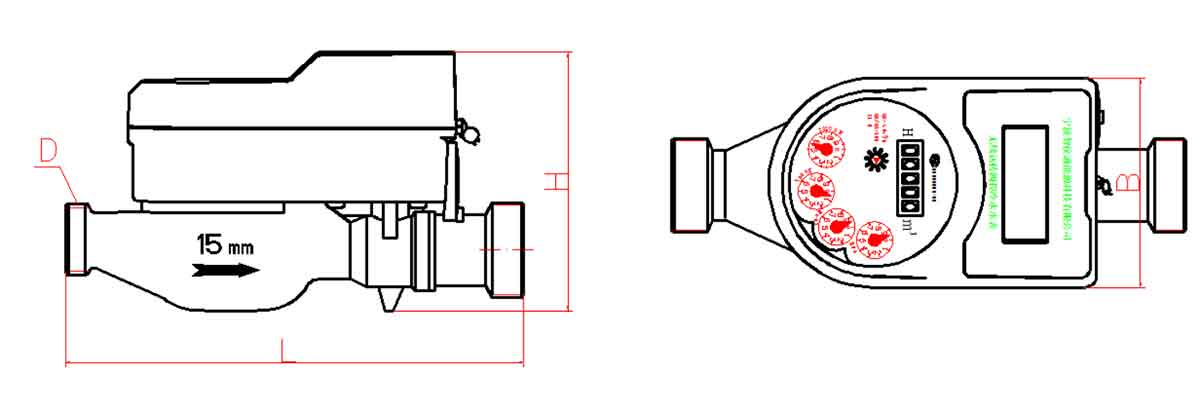
The core function of any meter is to measure fluid volume accurately. Modern devices utilize several distinct technologies to achieve this, depending on the application and pipe diameter.
Ultrasonic: This technology uses sound waves to calculate flow velocity. Transducers send ultrasonic signals both upstream and downstream through the water. The time difference between these signals directly correlates to the speed of the water. Because ultrasonic meters have zero moving parts, they do not suffer from mechanical wear and tear. They maintain their factory-calibrated accuracy for decades, even when exposed to grit or particulates in the water supply. They also feature empty pipe detection, alerting operators when a line drains completely.
Electromagnetic (Mag Meters): Operating on Faraday’s Law of Induction, mag meters generate a magnetic field across the measuring tube. As conductive water flows through this field, it creates a voltage proportional to the flow velocity. Electrodes capture this voltage to calculate volume. Mag meters are highly accurate and are the standard choice for large-diameter industrial pipes and main municipal distribution lines. They require specific straight pipe runs upstream and downstream to ensure a uniform flow profile.
Mechanical with Digital Encoders: This is a hybrid approach used primarily for retrofitting. Traditional spinning magnetic disc meters are fitted with digital pulse output modules. As the internal disc spins, the module registers a pulse for a specific volume of water. While this adds communication capabilities to legacy hardware, it still relies on mechanical components that will eventually degrade and lose low-flow accuracy.
Flow Measurement Technology Comparison
Technology | Moving Parts | Best Application | Long-Term Accuracy |
|---|---|---|---|
Ultrasonic | None | Residential & Commercial | Excellent (No degradation) |
Electromagnetic | None | Large Industrial & Mains | Excellent (Requires conductive fluid) |
Mechanical + Encoder | Yes | Budget Retrofits | Declines over time |
How the meter communicates its data dictates the operational efficiency of the entire network. The industry relies on two primary transmission frameworks.
Automated Meter Reading (AMR) is a one-way communication protocol. The meter broadcasts its reading, but the utility must send a technician to drive or walk through the neighborhood with a mobile receiver to capture the signal. While AMR drastically speeds up the reading process compared to visual inspections, it still requires rolling trucks. It does not provide real-time alerting capabilities because data is only collected once a month or once a quarter.
Advanced Metering Infrastructure (AMI) represents a generational leap in utility management. AMI utilizes a fixed-network architecture to establish two-way communication between the meter and the utility. This allows for on-demand reads, continuous consumer-to-provider data flow, and remote diagnostics. In advanced models equipped with motorized valves, AMI even enables remote shut-off capabilities to instantly isolate severe leaks or manage delinquent accounts without sending a technician to the curb stop.
The physical environment dictates which communication layer will perform best. Evaluating network topologies is necessary for ensuring reliable data delivery from geographically dispersed or hazardous locations.
Cellular (NB-IoT, LTE-M): Narrowband IoT and LTE-M leverage existing telecom infrastructure. These networks are specifically designed for machine-to-machine communication. They offer excellent signal penetration, making them ideal for meters installed in deep basements or concrete structures. Because they use public cellular towers, utilities do not need to build or maintain their own network gateways. You simply install the meter, and it connects to the local cell tower.
LoRaWAN: Long Range Wide Area Network is a low-power protocol ideal for municipal deployments covering vast geographic areas. LoRaWAN requires the utility or facility to install private gateways to catch the meter signals. It excels in rural or sprawling suburban environments where line-of-sight communication is easier to achieve. You control the network, but you are responsible for gateway maintenance.
Proprietary RF: Many legacy manufacturers utilize proprietary radio frequencies, often operating in the unlicensed 900 MHz spectrum. While these networks are highly reliable and tailored specifically for water metering, they lock the utility into a single vendor's hardware and software ecosystem, limiting future interoperability.
Non-revenue water consists of apparent losses (meter inaccuracies and theft) and real losses (physical pipe leaks). Mechanical meters naturally degrade over time, losing their ability to register water flowing at very low velocities. Ultrasonic technology solves this by capturing even the smallest drops, often measuring flows as low as 1/8 gallon per minute. This extreme low-flow accuracy maps directly to a critical business outcome: capturing previously unbilled revenue. By accurately measuring every drop, utilities instantly reduce apparent losses and improve their billing precision, ensuring consumers pay exactly for what they use.
Traditional meters only reveal leaks after a massive, unexpected bill is generated weeks later. Smart systems change this dynamic through continuous data logging. By recording consumption in 15-minute or hourly intervals, the MDM software establishes a baseline of normal use. If the system detects continuous flow without a break for 24 hours, it automatically triggers a plumbing leak alert. Furthermore, these meters can detect reverse flow events. Reverse flow indicates dangerous cross-connection issues or main breaks that pose severe contamination risks to the public water supply.
Utility customer service centers spend a disproportionate amount of time handling billing disputes stemming from estimated reads or hidden leaks. Real-time data portals empower end-users by giving them direct access to their consumption telemetry. Consumers can log into a dashboard, view their daily usage, and set custom alerts for abnormal flow via SMS or email. This transparency drastically reduces inbound customer service calls. When disputes do arise, customer service representatives can pull up the exact hourly data to explain the billing spike, resolving the issue with undeniable data rather than guesswork.
Water scarcity is a pressing global issue, and corporate water stewardship is heavily scrutinized. High-resolution water data plays a pivotal role in meeting corporate Environmental, Social, and Governance (ESG) targets. Facility managers use sub-metering data to identify inefficient cooling towers, track irrigation usage, or monitor manufacturing processes. Municipalities rely on this data to monitor reservoir drawdowns, enforce localized drought restrictions, and generate accurate reports on overall water conservation efforts.
Hardware capabilities are irrelevant if the data remains siloed. Assessing the requirements for API connectivity is a mandatory step in any deployment. The meter data management system must push telemetry into existing software ecosystems. For municipalities, this means direct integration with ERP and billing software using RESTful APIs or automated CSV exports. For commercial and industrial facilities, the data must flow into Building Management Systems (BMS) or SCADA networks via Modbus or DNP3 protocols to trigger automated industrial controls based on real-time water usage.
Deploying metering technology requires matching the hardware specifications to the environmental demands. Residential and municipal rollouts involve high volumes of small-diameter pipes, typically 5/8 inch to 1 inch. In these scenarios, the primary focus is on maximizing battery life, ensuring consumer data transparency, and keeping per-unit hardware costs manageable. The sheer volume of meters deployed means that even small savings per unit translate to massive budget impacts.
Conversely, commercial and industrial applications deal with large-scale, high-pressure environments. These meters range from 2 inches to 12 inches in diameter. They measure massive volumes of water where a 1% accuracy error can result in thousands of dollars of lost revenue. Industrial priorities focus on extreme accuracy under varying pressure conditions, ruggedized IP68 waterproof housings to survive flooded vaults, and direct integration with localized SCADA systems for immediate process control.
Utility managers face a critical decision when upgrading: retrofit existing infrastructure or execute a full system replacement. Evaluating the viability of attaching smart endpoints to existing mechanical meters often comes down to budget constraints and labor availability. Retrofitting requires lower initial capital expenditure and allows for much faster deployment. A technician can swap a register in ten minutes since plumbers do not need to cut pipes or shut off the curb stop. However, this method relies on aging mechanical measuring chambers that will eventually fail.
Installing entirely new solid-state meters requires a higher upfront investment and more complex installation logistics. Technicians must isolate the line, break corroded flanges, and install new hardware. The payoff is substantial. Full replacement guarantees better long-term accuracy, eliminates moving parts, and ensures the utility captures every drop of low-flow revenue for the next two decades.
Retrofit Endpoints vs. Solid-State Meters Comparison
Feature | Retrofit Endpoints (Mechanical) | Solid-State Meters (Ultrasonic/Mag) |
|---|---|---|
Upfront Hardware Cost | Lower (reuses existing brass body) | Higher (complete unit replacement) |
Deployment Speed | Fast (no plumbing modifications required) | Slower (requires pipe cutting and fitting) |
Moving Parts | Yes (retains mechanical wear issues) | None (zero mechanical degradation) |
Long-Term Accuracy | Declines over time at low flow rates | Maintains factory calibration for lifespan |
Maintenance Needs | Higher risk of mechanical jamming | Minimal (virtually maintenance-free) |
The physical realities of water infrastructure present significant communication challenges. Meters are frequently installed in deep concrete vaults, subterranean basements, or rural areas surrounded by dense foliage. Standard RF or cellular signals struggle to penetrate these dense physical barriers, creating network dead zones. Utilities must address this risk during the planning phase. Heavy cast-iron vault lids block radio waves completely. Mitigation strategies include replacing cast-iron lids with composite polymer lids that allow signals to pass through. In extreme cases, technicians must install signal repeaters or route external through-the-lid antennas to establish a reliable connection with the network gateway.
Because these devices operate independently of the electrical grid, power management is a critical engineering challenge. Utilities must analyze the trade-off between data transmission frequency and the guaranteed lifespan of the internal battery. Most modern units use lithium thionyl chloride (Li-SOCl2) batteries. Transmitting data in real-time drains power rapidly, potentially killing a battery in just a few years. To achieve the industry-standard 10 to 20-year lifespan, systems utilize sleep modes and batch data. The meter logs consumption every 15 minutes but only wakes up its radio module once a day to transmit the batched data payload, thereby preserving battery chemistry.
As utilities transition to digital ecosystems, the risk of data interception grows. Unsecured utility data can reveal a consumer's daily habits, indicating when they are home or away. Implementing end-to-end encryption is an absolute necessity. Industry standards require AES-128 or AES-256 encryption for all data packets moving from the meter to the MDM software. Utilities must navigate and comply with regional data privacy frameworks, ensuring that telemetry is anonymized. Secure key management protocols and role-based access controls within the software are strictly enforced to prevent unauthorized network access.
Technological upgrades inherently disrupt established workflows. The hurdle of change management is often more difficult to navigate than the hardware installation itself. Utilities must proactively educate end-users on the new system, addressing public perception regarding data privacy and radio frequency emissions. Internally, staff must transition from manual field operations to digital analysis. Meter readers must be retrained as field technicians. This requires comprehensive training on the new MDM software, teaching customer service teams how to interpret granular flow data, and training maintenance crews on how to respond to automated leak alerts rather than visual inspections.
Audit your existing meter inventory to determine the ratio of aging mechanical units to compatible retrofit candidates.
Deploy a 50-unit proof of concept (PoC) pilot program in known network dead zones to test cellular or LoRaWAN signal penetration.
Evaluate the API documentation of your chosen vendor to ensure telemetry data flows directly into your existing billing or ERP software.
Standardize your vault lid replacement strategy, swapping cast-iron covers for composite polymer lids to guarantee reliable radio frequency transmission.
A: No. These devices operate entirely on internal, high-capacity lithium batteries. By utilizing low-power wide-area network (LPWAN) transmission protocols and batching data uploads into daily transmissions, the internal batteries are engineered to last between 10 and 20 years without requiring replacement or external electrical wiring.
A: Traditional mechanical meters rely on moving parts that degrade and lose accuracy over time, especially at low flow rates. Solid-state ultrasonic and electromagnetic meters maintain pinpoint accuracy throughout their entire lifecycle because they have no moving parts to wear down, capturing revenue that mechanical meters miss.
A: Yes. While the meter cannot physically see the pipe, it uses continuous flow data and mass balance calculations to identify hidden leaks. If the system detects a constant flow of water without any breaks over a 24-hour period, it triggers an automated alert for a suspected plumbing leak.
A: Automated Meter Reading (AMR) relies on one-way communication, requiring a technician to drive or walk by to collect data. Advanced Metering Infrastructure (AMI) uses a fixed network for two-way communication, enabling real-time data collection, remote diagnostics, and remote valve shut-off capabilities without dispatching personnel.
A: Data is secured using advanced end-to-end encryption standards, typically AES-128 or AES-256. Providers utilize secure key management and transmit anonymized data payloads. This ensures that intercepted data cannot be traced back to a specific consumer's personal identity or daily household habits.
A: Yes. Many legacy mechanical meters are compatible with digital retrofits. Technicians can attach a digital endpoint or pulse-output register to the existing meter body. This allows the old mechanical meter to transmit data wirelessly without the expense of replacing the entire brass housing.
A: Consumers gain access to personal usage dashboards via web or mobile apps. This transparency allows them to monitor daily consumption, set budget goals, and receive early leak warnings to prevent severe property damage. It also completely eliminates inaccurate, estimated utility bills.
