


Views: 0 Author: Site Editor Publish Time: 2026-08-01 Origin: Site


The transition from estimated thermal energy billing to precise, data-driven measurement is no longer optional for modern facility management and district energy networks. Inaccurate heat allocation leads to financial disputes, regulatory non-compliance, and inefficient system operations. Facility managers and engineers need reliable thermal measurement to validate system efficiency and ensure equitable billing across all endpoints.
Understanding the specific environments where a Heat Meter is deployed—from massive district networks to individual residential units—is the first step in specifying the correct measurement technology, communication protocol, and maintenance schedule. Accurate data collection transforms raw thermal output into actionable, verifiable metrics that drive operational improvements.
District and Communal Dominance: The primary application for heat meters remains district heating networks, where they serve as the critical cash register between the energy provider and the building substation.
Residential Adoption: The deployment of the residential heat meter is accelerating in multi-tenant buildings to comply with fair-billing regulations and incentivize tenant energy conservation.
Technology Matching: Selecting between mechanical and ultrasonic meters depends entirely on the application environment, specifically regarding water quality, flow rates, and required maintenance intervals.
Integration is Critical: A heat meter's value is realized through its data; successful deployment requires alignment with Building Management Systems (BMS) via standardized protocols like M-Bus or LoRaWAN.
Flat-rate billing and basic run-time apportionment present severe operational limitations. These outdated methods fail to account for actual thermal energy consumed, resulting in unfair billing practices and providing zero incentive for energy conservation. A standard thermal measurement device solves this by integrating three core components. The flow sensor measures the volume of the heating medium. Paired temperature sensors record the supply and return temperatures. The calculator unit then processes this data to determine the exact thermal energy transferred according to EN 1434 standards.
Direct thermal measurement calculates the flow rate against the temperature differential. This process provides verifiable, auditable data. Facility operators rely on these exact figures for accurate billing and system diagnostics, removing the guesswork inherent in older apportionment models.
Feature | Run-Time Apportionment | Exact Thermal Measurement |
|---|---|---|
Data Accuracy | Low (Estimates based on time) | High (Calculates flow and temp differential) |
Billing Fairness | Poor (Subsidizes heavy users) | Excellent (Pay for exact usage) |
System Diagnostics | None | Identifies flow issues and heat losses |
Regulatory Compliance | Fails modern standards | Meets EN 1434 and local mandates |
International and regional mandates heavily influence deployment strategies. The EU Energy Efficiency Directive requires individual metering in multi-dwelling units and shared heating systems. These regulations aim to reduce carbon footprints by making consumers aware of their actual usage. Compliance is mandatory for new builds and major renovations, forcing property developers to integrate metering infrastructure early in the design phase.
Accurate metering also plays a crucial role in securing government grants. Subsidies for renewable heating systems often require proof of performance. Verifiable data validates the efficiency of heat pumps and biomass boilers, ensuring installations meet the strict criteria required for financial incentives.
Large-scale generation sources require robust monitoring at the plant level. Engineers deploy meters at Combined Heat and Power (CHP) plants, large-scale heat pumps, and biomass boilers to measure the total thermal output entering the distribution network. This establishes the baseline for all subsequent efficiency calculations.
It is important to distinguish between district energy and communal heating. District energy involves city-wide external utility distribution across multiple buildings. Communal heating refers to localized shared boiler systems within a single multi-unit block. In both scenarios, monitoring network distribution losses is critical. Operators compare the centralized plant output against the aggregated consumer consumption to identify leaks or insulation failures.
Install primary meters at the generation source to establish baseline thermal output.
Deploy secondary meters at major network branches to isolate distribution losses.
Aggregate endpoint consumption data to calculate overall network efficiency.
Perform routine audits comparing generation data against billed consumption.
The primary node in a district heating network sits at the building level. Here, the meter measures the energy transferred from the main network to the building's internal system, typically located at a sub-station or large heat exchanger. The data collected here represents the total energy consumption for the entire building.
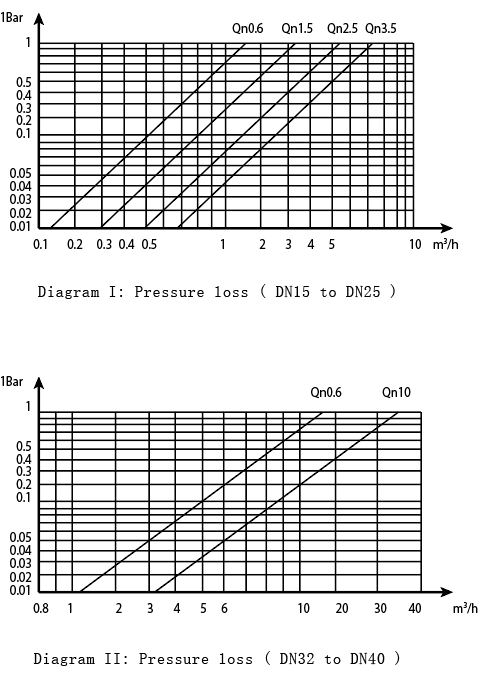
Evaluating pressure drop and high-temperature tolerance is vital for primary network meters. These devices handle massive flow volumes and extreme temperatures. Engineers specify units that withstand these harsh conditions without restricting system flow or causing premature wear on circulation pumps.
Equitable tenant billing requires precise measurement at the individual apartment level. Deploying a Residential Heat Meter ensures residents pay only for the energy they consume. This secondary node replaces outdated floor-area billing methods and directly incentivizes tenants to manage their heating usage responsibly.
Space is often limited in modern apartment designs. Engineers evaluate compact meter designs for installation in tight utility cupboards. Heat Interface Units (HIUs) frequently incorporate these compact meters, streamlining installation and simplifying ongoing maintenance for property managers.
Single-family homes increasingly utilize renewable energy sources. Meters validate the Coefficient of Performance (COP) of residential air-source and ground-source heat pumps. This data confirms that the system operates within expected efficiency parameters and helps homeowners identify performance degradation early.
Solar thermal arrays also benefit from accurate measurement. Measuring the thermal yield verifies the return on investment for the homeowner. It provides concrete data on how much conventional energy the solar array has offset during specific periods.
Large corporate environments require detailed energy allocation. Departmental or floor-by-floor sub-metering allocates energy costs accurately across different corporate cost centers. This granular data helps facility managers identify high-consumption zones and enables targeted energy reduction initiatives.
Integration with HVAC systems optimizes heating schedules based on actual thermal demand. Real-time data allows building management to adjust temperatures dynamically, preventing over-heating in unoccupied areas and reducing overall energy waste across the campus.
Commercial greenhouses rely on localized climate control systems. Deployment in these environments monitors and optimizes heating distribution. Maintaining precise temperatures is critical for crop yield, and accurate thermal data prevents crop loss due to temperature fluctuations.
Industrial manufacturing processes demand strict thermal monitoring. Processes like drying and pasteurization consume massive amounts of energy. Measuring this thermal energy calculates the exact cost-of-goods-sold (COGS), allowing manufacturers to optimize their processes and improve margins.
Mechanical meters utilize a rotating impeller to measure flow. They are suited for clean, closed-loop residential systems but remain susceptible to wear and tear from particulates in the water. Over time, friction degrades their accuracy.
Ultrasonic meters utilize sound waves to determine flow velocity. They offer high accuracy and feature no moving parts, resulting in a significantly lower pressure drop across the device. They are the established standard for district heating and demanding commercial applications.
Specification | Mechanical Meters | Ultrasonic Meters |
|---|---|---|
Moving Parts | Yes (Impeller) | No |
Pressure Drop | Moderate to High | Very Low |
Particulate Sensitivity | High (Prone to jamming) | Low (Reflectors can foul over time) |
Primary Application | Clean residential loops | District, commercial, and dirty systems |
Over-sizing meters based solely on pipe diameter is a common installation error. Engineers size devices based on actual nominal flow rates (Qp). An oversized meter fails to register low flow rates accurately, resulting in unbilled energy and skewed efficiency data.
Sealed central heating systems experience volumetric expansion. Water volume expands by approximately 4% when heated. System design accounts for this expansion and its relationship with expansion vessels. Calculating acceptable pressure drops avoids cavitation and prevents overworking the system's circulation pumps.
Accurate temperature differential measurement relies on matched sensor pairs. Evaluating matched pair PT100, PT500, or PT1000 platinum resistance thermometers is critical. These sensors are calibrated together to ensure minimal deviation.
Installation methods vary based on pipe size and maintenance requirements. Direct immersion places the sensor directly in the flow stream for rapid response. Pocket (thermowell) installation allows for sensor replacement without draining the system. Engineers balance response time against maintenance accessibility.
M-Bus (Meter-Bus) remains the industry standard for hardwired, multi-meter networks. It provides reliable, robust data transmission across large residential and commercial complexes. Hardwired systems eliminate battery life concerns for communication modules.
Retrofit applications often make cabling cost-prohibitive. In these scenarios, Wireless M-Bus and LoRaWAN offer viable alternatives. These wireless protocols transmit data over long distances with minimal infrastructure, making them ideal for upgrading older buildings to modern automated reading standards.
Translating meter data into actionable insights is the ultimate goal. Integration with a BMS enables predictive maintenance and system optimization. Operators identify flow anomalies or temperature drops before they cause system failures.
Security considerations are paramount when transmitting billing-grade data. Shared networks require robust encryption to protect consumer privacy and prevent data tampering. Secure data pipelines ensure the integrity of the billing process.
Inaccurate readings frequently stem from turbulent flow or air pocket accumulation. Poor installation geometry disrupts the flow profile required for accurate measurement. This is a primary risk during the construction phase.
Mitigation requires adhering strictly to manufacturer requirements. Installers provide adequate straight pipe runs upstream and downstream of the flow sensor. Ensuring correct orientation, whether horizontal or vertical, prevents air entrapment and ensures consistent accuracy.
Magnetite and debris buildup pose severe risks to system longevity. These particulates foul mechanical impellers and coat ultrasonic reflectors. Poor water quality rapidly degrades measurement accuracy and leads to premature device failure.
Mandatory installation of magnetic filters and dirt separators mitigates this risk. Maintaining proper water treatment protocols, such as VDI 2035, protects the entire heating system. Clean water is essential for sustained meter performance.
Understanding legal metrology requirements is necessary for long-term compliance. Jurisdictions typically require recalibration or replacement every 5 to 10 years. Facility managers track these lifecycles to avoid operating non-compliant devices.
Proactive maintenance planning prevents unexpected system downtime. Regular physical inspections and data validation checks ensure ongoing accuracy. Proper planning accounts for the eventual replacement of measurement capsules or entire units.
Conduct a comprehensive system audit to determine exact nominal flow rates (Qp) before selecting meter sizes.
Assess system water quality and install necessary magnetic filters or dirt separators prior to meter deployment.
Select the appropriate communication protocol (M-Bus, LoRaWAN) based on whether the project is a new build or a retrofit.
Establish a clear maintenance and recalibration schedule to comply with local legal metrology requirements.
A: A standard water meter only measures the volume of liquid passing through a pipe. A thermal measurement device measures both the volume of fluid and the temperature differential between the supply and return lines. It uses a calculator to compute the actual thermal energy transferred.
A: In many regions, yes. Directives like the EU Energy Efficiency Directive mandate individual metering in multi-dwelling buildings supplied by a central heating source. This ensures equitable billing based on actual consumption rather than flat-rate floor area calculations.
A: Yes, they can be retrofitted into existing systems. However, the system must have a clear single entry and exit point for the heating loop of that specific residence. Wireless communication protocols like LoRaWAN make retrofitting easier by eliminating the need for new data cables.
A: Water expands by about 4% when heated. If the system lacks proper expansion vessels, pressure fluctuations occur. While modern meters compensate for temperature-based density changes, extreme pressure spikes from poor system design can damage the flow sensor or cause leaks.
A: Communal heating serves a single building or block of apartments from a localized shared boiler. District heating distributes thermal energy from a large, centralized generation plant across a city-wide network to multiple independent buildings.
A: Most ultrasonic units have a battery life and operational lifespan of 10 to 15 years. However, legal metrology regulations in many jurisdictions require recalibration or replacement of the measurement capsule every 5 to 10 years to ensure billing accuracy.
A: Inaccuracies usually stem from poor installation, such as lacking required straight pipe runs, causing turbulent flow. Poor water quality leading to magnetite buildup on sensors, or mismatched temperature sensors, will also severely degrade measurement accuracy.
A: Not always. Many modern units run on internal lithium batteries designed to last 10 to 15 years. However, units integrated into hardwired M-Bus networks or Building Management Systems can draw power directly from the communication bus or an external mains supply.

