

Views: 0 Author: Site Editor Publish Time: 2026-08-11 Origin: Site


Aging water infrastructure bleeds resources. It drives up operational costs and worsens global water scarcity. Strict sustainability mandates force municipalities and property managers to rethink resource distribution. Legacy mechanical metering fails to meet these modern demands. Mechanical components degrade over time. They under-register flow and allow significant revenue to slip through the cracks. Relying on manual reading processes introduces massive inefficiencies. It delays leak detection and creates inaccurate billing cycles that frustrate consumers and shrink utility margins.
Advanced Metering Infrastructure (AMI) provides the necessary evolution for data-driven municipal and private water management. Deploying a modern Smart Water Meter shifts the operational focus. We move from basic, retrospective consumption tracking to real-time network optimization. This transition empowers utilities to proactively manage distribution, instantly detect anomalies, and enforce resource conservation with unprecedented accuracy.
Transitioning to a smart water meter infrastructure directly reduces apparent water loss, ensures billing fairness, and slashes operational expenditures (OpEx) associated with manual truck rolls.
Selecting the right communication protocol (e.g., LoRaWAN, NB-IoT, Cellular) is as critical as the meter hardware itself for long-term scalability across diverse municipal topographies.
Deploying a residential smart water meter requires proactive change management—including transparent installation schedules—to address consumer privacy concerns, prevent service disruption backlash, and demonstrate end-user value.
True ROI depends on seamless integration between the physical meters and the utility’s Meter Data Management (MDM) and billing software.
Non-Revenue Water represents the volume of treated water pumped into the distribution grid that never generates revenue due to leaks, theft, or metering inaccuracies. When a utility's NRW percentage crosses the 15% threshold, upgrading infrastructure becomes an immediate operational necessity rather than a deferred capital project. Legacy mechanical meters consistently fail to register low-flow events. A standard mechanical meter often stalls at flows under 1/4 gallon per minute, allowing thousands of gallons to pass unmeasured annually per household.
Continuous flow monitoring identifies micro-leaks and unauthorized consumption immediately. Solid-state measurement technologies capture flow rates down to a fraction of a gallon per minute. This sustained measurement accuracy translates directly to billing fairness. Customers are charged strictly for their actual usage, eliminating estimated billing disputes. Utilities recover lost revenue by capturing previously unrecorded consumption, rapidly accelerating the return on infrastructure investments. Field data consistently shows that replacing aged mechanical fleets with solid-state AMI endpoints yields a 3% to 7% immediate increase in captured revenue simply by registering low-flow leaks that previously went unnoticed.
Manual drive-by Automated Meter Reading (AMR) and walk-by data collection waste thousands of labor hours annually. Eliminating these physical routes slashes operational expenditures. Field crews are freed to focus on preventative maintenance, valve exercising, and critical main repairs. Remote data transmission automates the entire meter-to-cash process, removing human error from transcription and data entry.
Transitioning to a fixed network eliminates several costly field activities:
Routine monthly or quarterly manual meter reading routes.
Off-cycle reads for move-in/move-out tenant transitions.
Re-reads triggered by implausible data entry or estimated billing disputes.
Physical site visits to verify suspected customer-side leaks.
Remote diagnostics provide a massive operational advantage. System operators monitor endpoint health, battery status, and tamper alerts from a centralized dashboard. Automated compliance reporting streamlines regulatory submissions, ensuring utilities meet strict environmental mandates without manual data compilation. Integrated remote shut-off capabilities allow utilities to instantly mitigate catastrophic property damage during major pipe bursts or manage delinquent accounts safely without dispatching personnel into potentially hostile field environments.
Granular, time-stamped data transforms how utilities manage grid resilience. Traditional quarterly or monthly reads provide zero visibility into daily consumption habits. High-frequency data collection allows engineers to map exact peak usage patterns across different neighborhoods and industrial zones. This data feeds directly into hydraulic modeling software, giving operators a real-time view of system stress.
Understanding these patterns enables utilities to optimize distribution pressure dynamically. Lowering pressure during off-peak hours reduces stress on aging pipes and minimizes the volume of water lost through existing background leaks. Accurate demand forecasting allows municipalities to defer costly infrastructure expansions. Instead of building new treatment plants or larger storage reservoirs, utilities can implement targeted conservation campaigns during peak stress periods based on hard data.
Selecting the correct measurement mechanism dictates long-term accuracy and maintenance requirements. Solid-state meters, encompassing ultrasonic and electromagnetic technologies, feature entirely unobstructed flow tubes with zero moving parts. Ultrasonic meters utilize transit-time technology. They measure the velocity of acoustic signals traveling with and against the water flow. Electromagnetic meters apply Faraday’s law of induction, measuring the voltage generated as conductive water passes through a magnetic field.
Mechanical meters rely on physical impellers, oscillating pistons, or nutating discs. These moving parts inevitably suffer from wear and tear, particularly in environments with high particulate matter, grit, or hard water scaling. Over a 10-to-15-year lifecycle, mechanical meters experience severe accuracy degradation, often under-registering flow by up to 10% in their final years. Solid-state meters maintain a flat accuracy curve throughout their entire operational lifespan, ensuring consistent revenue capture from day one to year twenty.
Modern solid-state meters offer superior material sustainability. They utilize engineered polymers and recyclable composites, drastically reducing the environmental footprint compared to legacy meters built from heavy brass and lead-based alloys. This shift simplifies end-of-life recycling protocols and complies with increasingly strict lead-free plumbing regulations enforced by environmental protection agencies.
Comparison of Water Meter Measurement Technologies
Technology Type | Measurement Principle | Moving Parts | Accuracy Degradation | Ideal Application |
|---|---|---|---|---|
Ultrasonic | Acoustic transit-time | None | Minimal over 15+ years | Residential and commercial precision |
Electromagnetic | Magnetic induction | None | Minimal over 15+ years | Large commercial and industrial mains |
Mechanical | Physical displacement/velocity | Yes (Impellers/Pistons) | High (degrades after 5-7 years) | Legacy infrastructure replacements |
The communication network serves as the central nervous system of any AMI deployment. Cellular networks (LTE-M and NB-IoT) offer decentralized, plug-and-play deployments. They leverage existing telecommunications infrastructure, eliminating the need for utilities to install and maintain proprietary gateways. Cellular is highly effective for rural areas, geographically dispersed endpoints, or small municipalities where building a private network is unfeasible.
Fixed-network Radio Frequency (RF) systems, such as LoRaWAN or 900MHz proprietary bands, excel in dense municipal grids. Utilities deploy proprietary gateways on water towers, streetlights, and municipal buildings to create a localized, highly controlled network. This topology requires higher upfront engineering but eliminates recurring third-party telecom fees per endpoint.
Network selection directly impacts hardware battery life. High-frequency transmissions with large payload sizes drain batteries rapidly. Cellular modules typically consume more power during transmission than Low-Power Wide-Area Network (LPWAN) RF modules. Engineers must balance the desire for real-time data latency against the physical limitations of onboard power supplies. Optimizing transmission schedules—such as sending data in batched packets four times a day rather than hourly—ensures the hardware survives its projected lifespan.
Communication Protocol Trade-offs
Protocol | Infrastructure Required | Power Consumption | Best Use Case |
|---|---|---|---|
Cellular (LTE-M/NB-IoT) | None (Uses existing cell towers) | Moderate to High | Rural, dispersed, or small-scale deployments |
LoRaWAN | Utility-owned gateways | Low | Dense urban grids, smart city integrations |
Proprietary RF (900MHz) | Utility-owned collectors/repeaters | Low | Standard municipal water districts |
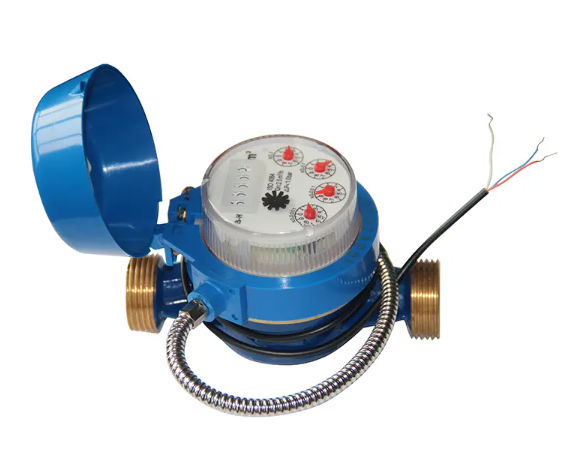
Deploying a Residential Smart Water Meter network involves significant interaction with private property. Unannounced installations present a massive operational risk. Sudden water shut-offs without resident consent immediately damage public trust and generate severe political backlash for municipal leaders. Homeowners expect transparency when utility contractors operate near their property lines or inside their basements.
Utilities must execute a mandatory, multi-channel communication framework prior to any retrofitting. A standard deployment communication timeline includes:
Mailing formal notification letters 30 days prior to the neighborhood installation phase.
Leaving informational door hangers one week before the scheduled replacement.
Sending automated SMS or email alerts 24 hours before the contractor arrives.
Providing a clear, post-installation packet explaining how to access the new consumer portal.
Clear communication regarding the duration of the water outage, the identity of the installation contractors, and the direct benefits to the homeowner prevents service disruption backlash and ensures smooth access to property lines.
Sub-metering in residential complexes and high-density housing presents unique technical hurdles. Endpoints are frequently located in deep basements, subterranean utility closets, or behind thick concrete walls. These environments severely attenuate RF signals, creating dark zones where data transmission fails. Cast-iron pit lids in outdoor installations also block signals, requiring specialized hardware adaptations.
Overcoming these challenges requires specialized network engineering. Technicians deploy high-penetration communication modules specifically tuned for subterranean environments. Installing strategic signal repeaters within elevator shafts or stairwells bounces data to exterior gateways. In cases of heavy interference, installers utilize wired absolute encoder registers to move the transmission module outside the signal-blocking enclosure. Replacing cast-iron pit lids with RF-friendly composite polymer lids or installing through-the-lid antennas ensures reliable daily reads.
A successful rollout requires public buy-in, achieved by providing direct value to the end-user. User-facing dashboards and mobile applications justify the infrastructure upgrade to the public. These portals translate raw consumption data into actionable insights, allowing residents to monitor their daily usage patterns. Instead of receiving a surprise bill at the end of the month, consumers can track their water footprint in near real-time.
Automated leak alerts serve as the most powerful feature of these portals. When the system detects continuous flow indicative of a running toilet, a stuck flapper, or a burst irrigation pipe, it instantly pushes an SMS or email alert to the homeowner. Empowering consumers to detect property-side leaks early prevents catastrophic water damage, directly saves them money on utility bills, and fosters proactive behavioral water efficiency.
High-frequency consumption data reveals intimate details about household occupancy and daily routines. Transmitting this data requires strict adherence to cybersecurity protocols. End-to-end encryption, utilizing AES-128 or AES-256 standards, must protect data both at rest and in transit. Utilities cannot treat meter data as simple text files; it must be handled with the same security rigor as financial transactions.
Compliance with local data protection regulations is mandatory. Utilities must mitigate public resistance by clearly explaining data anonymization techniques. Publish transparent usage policies detailing exactly who has access to the data, how long it is stored, and how it is protected against third-party breaches. Securing the network via private Access Point Names (APNs) and enforcing role-based access controls within the utility prevents unauthorized internal and external data harvesting.
Procurement teams must establish realistic expectations for hardware longevity. Vendors frequently advertise 10-to-20-year battery lives. Actual field performance depends entirely on the data transmission frequency and environmental temperatures. Transmitting data hourly depletes a battery significantly faster than transmitting a single daily batch report. Extreme cold or prolonged heat waves also degrade battery chemistry over time.
Evaluate the structural design of the endpoint. Most modern endpoints utilize Lithium Thionyl Chloride (Li-SOCl2) batteries due to their high energy density and low self-discharge rate. Replaceable batteries allow utilities to extend the life of the communication module without discarding the entire measurement unit. Sealed, potted units offer superior protection against water ingress in flooded meter pits but require full replacement once the battery dies. Modern procurement contracts should include vendor-managed recycling programs to handle lithium batteries and electronic waste responsibly at the end of the hardware's lifecycle.
Vendor lock-in paralyzes future network expansion. Utilities must demand open standards and API accessibility from their hardware providers. The physical meter is only a data collection tool; the true value lies in the Meter Data Management (MDM) system. The MDM acts as the central brain, processing millions of incoming data points through Validation, Estimation, and Editing (VEE) protocols before sending them to billing.
Outline a strict workflow for integrating new meter data with existing enterprise software. The MDM must push validated billing reads directly to the utility's Customer Information System (CIS) via secure API webhooks. Integrating the data with Supervisory Control and Data Acquisition (SCADA) and Geographic Information Systems (GIS) enables advanced analytics. This interoperability allows engineers to overlay consumption data onto physical pipe maps, isolating pressure zones and pinpointing distribution leaks with pinpoint accuracy.
Deploying across varied topographies guarantees network blind spots. Rural areas with dense foliage, rolling hills, and deep subterranean meter pits physically block RF signals. This results in stranded assets that require manual reading, defeating the purpose of the AMI investment.
Mitigation requires mandating comprehensive RF site surveys prior to procurement. Engineers must map the entire service territory, identifying potential interference from existing infrastructure. Conduct localized pilot testing in the most challenging environments to validate signal penetration. If a specific protocol fails during the pilot, utilities can pivot to hybrid networks. A hybrid approach utilizes cellular endpoints for hard-to-reach rural meters while maintaining a fixed RF network for the dense urban core.
Transitioning from monthly reads to hourly intervals means utilities suddenly collect millions of data points daily. Without the proper software infrastructure and trained personnel, this data swamp creates severe analytical bottlenecks, rendering the information useless. Utility staff can quickly become overwhelmed by false positive leak alerts and massive data storage requirements.
Mitigation involves a phased software implementation. Do not attempt to launch predictive maintenance algorithms on day one. Start by integrating the MDM strictly for basic billing automation. Once the meter-to-cash process is stable, gradually introduce consumer portals. Finally, deploy advanced analytics for pressure optimization and grid resilience. This phased approach allows utility staff to adapt to the new data volume without overwhelming internal IT resources.
Global hardware procurement faces continuous volatility. Chipset shortages, resin scarcity, and logistical bottlenecks frequently derail deployment schedules. These delays leave utilities with half-finished networks, stranded capital, and frustrated installation contractors waiting for inventory.
Mitigation requires aggressive contract structuring. Establish phased delivery milestones tied directly to payment schedules. Include strict penalty clauses for missed delivery dates. Maintain secondary supplier agreements for critical components like endpoint transmitters, brass fittings, and mounting hardware. By diversifying the supply chain and enforcing contractual accountability, project managers protect deployment timelines against global manufacturing disruptions.
Advanced metering technology is no longer an experimental luxury. It is a baseline requirement for financially, operationally, and environmentally sustainable water management. Transitioning away from degrading mechanical systems eliminates manual inefficiencies, recovers lost revenue, and provides the granular data necessary to protect critical water resources.
When evaluating solutions, decision-makers must look beyond upfront hardware costs. Prioritize vendors that offer proven interoperability, reliable post-deployment support, and comprehensive customer communication templates. A successful deployment relies just as heavily on software integration and public reception as it does on the physical measurement mechanisms.
To ensure a successful transition, execute the following next steps:
Initiate a localized pilot program of 500 to 1,000 endpoints in a challenging topographical zone to validate network coverage and signal penetration.
Audit existing billing and CIS software to ensure API compatibility with modern MDM platforms before issuing a full-scale Request for Proposal (RFP).
Draft a comprehensive public outreach campaign detailing the installation timeline, privacy protections, and direct consumer benefits.
Establish baseline NRW metrics using current data to accurately measure the ROI and revenue recovery post-deployment.
A: The physical solid-state measurement unit typically maintains accuracy for 15 to 20 years. The communication module's battery life dictates the practical lifespan, averaging 10 to 15 years depending on data transmission frequency. High-frequency reads deplete batteries faster. Many modern units use recyclable components to manage end-of-life disposal responsibly.
A: It uses continuous flow algorithms rather than physical acoustic sensors. If the meter registers uninterrupted water flow for a continuous period, such as 24 hours, the system flags this as a leak. This threshold alert system instantly notifies the utility and the homeowner, preventing extensive property damage and high bills.
A: Yes, if the existing mechanical meter features an absolute encoder register. Utilities can attach a Meter Interface Unit (MIU) to the existing hardware to enable remote transmission. However, if the mechanical meter is already degraded and losing accuracy, full replacement is recommended to ensure reliable measurement.
A: Modern endpoints feature onboard data logging capabilities. During a network outage, the module stores hourly consumption data locally in its internal memory. Once connectivity is restored, the endpoint automatically transmits the backlogged data. This ensures no billing information is lost and consumption records remain continuous.
A: Yes, modern networks utilize strict cybersecurity measures. Data is secured using end-to-end encryption, typically AES-256, during transmission. Networks operate on private Access Point Names (APNs) and enforce strict role-based access controls. This prevents unauthorized interception, tampering, and ensures consumer privacy is maintained across the grid.
