


Views: 0 Author: Site Editor Publish Time: 2026-08-01 Origin: Site


Facility managers, MEP engineers, and property owners face mounting pressure to track thermal energy usage accurately. Rising utility expenses, strict ESG reporting requirements, and rigid tenant billing regulations demand precise measurement. Selecting the wrong measurement device carries significant operational risks. Choosing a meter based solely on pipe size rather than flow rate guarantees poor performance and skewed data. Neglecting low temperature-difference sensitivity leads to massive calculation errors, especially in modern hydronic setups. Ignoring communication protocols creates permanent data silos that frustrate facility teams. These oversights result in inaccurate billing, compliance failures, and premature hardware breakdowns.
This technical evaluation framework helps decision-makers navigate meter types, sizing specifications, compliance standards, and integration capabilities. You will learn how to evaluate compact versus split designs, match flow rates to system demands, and integrate modern communication protocols. Applying these principles ensures accurate, long-term thermal measurement for any commercial or residential facility.
Technology Match: Ultrasonic meters offer higher long-term accuracy, lower maintenance, and superior low-flow sensitivity compared to mechanical meters, though initial capital expenditure is higher.
Sizing by Flow, Not Pipe: A heat meter must be sized according to the system's nominal flow rate ($q_p$) and pressure drop limits, never just the existing pipe diameter.
Compact vs. Split Designs: Select integrated compact heat meters for space-constrained residential sub-metering, and modular split-system meters for high-capacity commercial plants.
System Compatibility: Modern low-temperature hydronic systems (such as heat pumps) require meters with highly sensitive temperature sensors capable of registering very narrow temperature deltas ($\Delta T$).
Data Integration: Selecting a smart heat meter requires aligning the device's communication protocol (e.g., M-Bus, BACnet, LoRaWAN) with the building's existing Building Management System (BMS) or billing software.
Regulatory Compliance: For tenant billing and legal compliance, meters must meet regional metrology standards (such as MID and EN 1434 in Europe or equivalent local weights and measures certifications).
A successful implementation goes beyond simply measuring thermal energy. The primary goal requires achieving revenue-grade accuracy for precise cost allocation. Accurate data allows facility teams to optimize HVAC efficiency and enable predictive maintenance schedules. When you install a Heat Meter, you establish a baseline for all energy optimization efforts. Without reliable data, balancing a hydronic system or identifying underperforming zones becomes guesswork.
Every thermal measurement system relies on three distinct core components. The flow sensor measures the volume of fluid passing through the pipe. A matched temperature sensor pair measures the supply and return line temperatures. Finally, the calculator integrates these variables to compute the total thermal energy consumed or supplied. If any of these three components fail or lose calibration, the entire energy calculation becomes invalid.
Understanding physical configurations helps determine the right fit for your mechanical room or tenant space. Manufacturers offer two primary designs, each suited to specific installation environments and pipe dimensions.
Compact Heat Meters: These are integrated, factory-calibrated single units. They house the flow sensor, calculator, and temperature sensors in one continuous assembly. They work best for space-constrained locations and individual apartment sub-metering. Installers favor them for residential retrofits because they require minimal wiring and setup time.
Split (Combined) Heat Meters: These modular systems separate the components. You source, install, and calibrate the flow sensor, calculator, and temperature sensors individually. This setup proves essential for large commercial plants, district heating networks, and deep industrial retrofits where pipe sizes exceed standard compact dimensions. Split systems allow you to replace a damaged flow tube without discarding the calculator.
Your end goal dictates the required specifications. Sub-metering for tenant billing demands high regulatory compliance and tamper-proof designs. You need devices that lock out unauthorized configuration changes. In contrast, internal energy monitoring for system optimization requires high data granularity and rapid polling rates to feed building management systems. Here, the focus shifts from legal metrology to actionable engineering data.
Consider a high-rise residential building. The central plant might use a large split system to measure total boiler output, while each apartment utilizes a compact unit for individual billing. The central plant device helps the facility manager track boiler efficiency, while the apartment units ensure fair cost distribution among tenants.
Engineers must choose between two primary flow measurement technologies. Each mechanism offers distinct operational characteristics, and selecting the wrong type for your fluid conditions guarantees premature failure.
Mechanical devices use a rotating turbine or impeller placed directly in the fluid stream. As water flows, it spins the impeller. The rotational speed correlates directly to the flow volume. These units perform adequately in completely clean water systems featuring consistent, high-velocity flow. They have served as the industry standard for decades due to their straightforward operation.
However, they remain highly susceptible to wear and tear. Moving parts inevitably degrade over time, reducing measurement accuracy. They are particularly sensitive to debris, scale, and magnetite buildup common in older hydronic systems. A single piece of pipe scale can jam the impeller, dropping the recorded flow to zero while water continues to pass through the system.
Ultrasonic technology utilizes transit-time measurement. Transducers send sound waves with and against the fluid flow. The time difference between these signals determines the exact flow velocity. Because they contain no moving parts, they provide sustained accuracy over the entire device lifecycle. They introduce minimal pressure drop and offer a significantly wider dynamic measuring range.
They do require specific installation conditions. You must ensure proper system venting to avoid air bubbles, which can disrupt the ultrasonic signal. Heavy aeration scatters the sound waves, causing the calculator to register an error code. Despite this, their resistance to magnetite and scale makes them superior for long-term deployments.
Use the following comparison to guide your specification process when evaluating mechanical room upgrades.
Feature | Mechanical Meters | Ultrasonic Meters |
|---|---|---|
Measurement Mechanism | Rotating impeller/turbine | Transit-time sound waves |
Moving Parts | Yes | None |
Long-Term Accuracy | Degrades over time due to wear | Sustained throughout lifecycle |
Pressure Drop | Moderate to High | Very Low |
Debris Sensitivity | High (requires strict filtration) | Low |
Ideal Application | Short-term projects, clean water | District heating, commercial assets |
To make the final selection, follow these evaluation steps:
Analyze the system water quality and age of the piping network.
Determine the required dynamic range based on seasonal load variations.
Calculate the maximum allowable pressure drop for the existing circulation pumps.
Review the maintenance budget for potential impeller replacements.
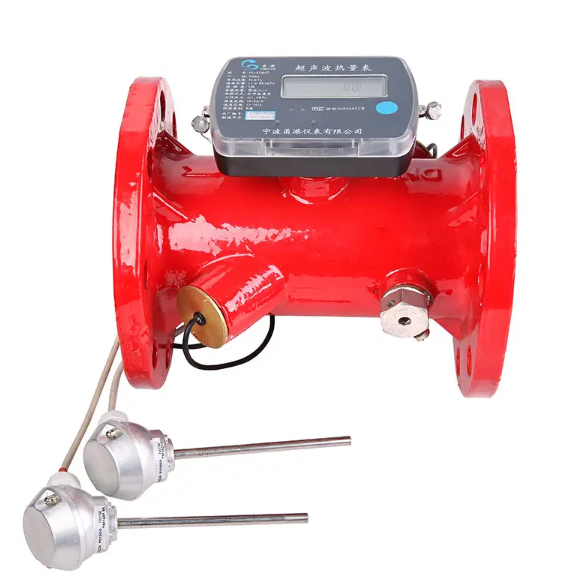
Improper sizing remains the most common failure point in thermal measurement design. You must evaluate specific operational parameters before installation. Relying on pipe diameter alone is an amateur mistake that leads to massive data discrepancies.
Never match the meter directly to the existing pipe diameter. You must calculate the nominal flow rate ($q_p$) based on the building's peak heating load. Oversizing the device means it will fail to register low flow during shoulder seasons, severely decreasing the dynamic range. Undersizing causes excessive pressure drop, restricts system flow, and guarantees hardware damage during peak loads.
For example, a 2-inch pipe might only carry a flow rate suitable for a 1.5-inch flow sensor. Installing a 2-inch sensor in this scenario means the low-flow events during mild weather will fall below the sensor's detection threshold. You lose billable data.
The dynamic range represents the ratio between the nominal flow ($q_p$) and the minimum measurable flow ($q_i$). A high turndown ratio proves necessary for identifying low-flow usage. High ratios prevent unrecorded thermal consumption, ensuring every kilowatt-hour gets billed accurately. Look for devices offering ratios of 1:100 or 1:250 for maximum low-flow sensitivity.
You must match the approved temperature range to your specific system. Chilled water, low-temperature heat pumps, and high-temperature district steam all require different sensor specifications. Using a standard heating sensor for a chilled water application often leads to condensation inside the electronics housing.
Modern low-temperature heat pump systems operate with much narrower temperature differentials. They often run at 3K to 5K deltas, compared to traditional boilers running at 20K. This creates a significant low $\Delta T$ challenge. You must select ultra-precise temperature sensor pairs, such as Pt100 or Pt500. These sensors require low minimum $\Delta T$ thresholds ($\Delta \Theta_{min} \le 1.0\text{K}$) to prevent massive calculation errors in low-temperature applications.
Every flow sensor introduces fluid resistance. You must evaluate the manufacturer's pressure drop charts carefully. Ensure your existing circulation pumps can handle the added resistance. Excessive pressure drop forces pumps to work harder, destroying overall system efficiency. Ultrasonic models generally offer a clear flow path, resulting in a fraction of the pressure drop seen in mechanical turbine models.
Upgrading to a Smart Heat Meter transforms raw thermal data into actionable operational insights. Automated data collection eliminates manual reading errors and enables real-time efficiency tracking. Facility managers no longer need to send technicians into dark mechanical rooms with clipboards.
Data transmission methods depend heavily on your building infrastructure. You must assess the physical layout before specifying a communication module.
Wired Networks (M-Bus, Modbus, BACnet): These protocols work best for new builds or deep retrofits where pulling cable remains feasible. Wired systems offer high reliability, rapid data polling, and external power capabilities. They easily support continuous data streams for complex automation. Modbus and BACnet are standard in commercial environments, allowing direct integration into central plant controllers.
Wireless Networks (Wireless M-Bus, LoRaWAN, NB-IoT): Wireless solutions prove ideal for retrofitting existing multi-tenant buildings. You must carefully evaluate battery life implications. Consider signal penetration through concrete walls and utility rooms. Understand the data payload constraints, as wireless devices typically transmit data less frequently to conserve power. LoRaWAN offers excellent deep indoor penetration, making it suitable for basement installations.
Specify open-protocol data transmission to avoid vendor lock-in. Ensure the device communicates seamlessly with your existing Building Management System. Open protocols guarantee automated tenant billing and simplify future hardware replacements. Proprietary systems force you to buy replacement parts from a single manufacturer, limiting your options and flexibility.
Legal compliance dictates which devices you can use for commercial transactions. You must verify metrology certifications before specification. Installing uncertified equipment for billing purposes invites tenant disputes and regulatory fines.
The EN 1434 international standard governs thermal energy meters. It details strict requirements for accuracy classes. Class 1 offers the highest precision, while Class 2 serves as the standard for most commercial applications. The standard also dictates rigorous environmental testing protocols, ensuring the device can withstand temperature shocks and humidity.
MID approval is legally mandatory if you use the data to bill tenants for energy consumption. Using non-MID approved devices for billing purposes violates local weights and measures regulations, exposing property owners to legal liabilities. Always request the MID certificate from the manufacturer and keep it on file.
MID environmental classes ensure reliable operation in harsh mechanical rooms. Class M1 and M2 define mechanical vibration tolerance. Class E1 and E2 dictate electromagnetic compatibility. High ratings ensure the device operates accurately even when installed next to heavy HVAC machinery, circulation pumps, and variable speed drives. Electromagnetic interference from a large variable frequency drive can easily corrupt the data signal of an unshielded device.
Legal requirements mandate periodic recalibration or replacement. Depending on the jurisdiction, meter type, and battery life, you must recertify the equipment every 5 to 10 years. Plan these lifecycles into your facility maintenance schedules. Many property managers opt to replace compact units entirely rather than paying for laboratory recalibration, as the hardware costs have decreased significantly.
Successful deployment requires strict adherence to installation guidelines. Poor installation practices negate all hardware accuracy. Even the most advanced ultrasonic device will output garbage data if installed backward or in a turbulent pipe section.
Pay close attention to piping geometry and sensor placement during the installation phase. Field technicians must follow the manufacturer's exact specifications.
Straight Pipe Runs: Most flow sensors require specific upstream and downstream straight pipe lengths. This ensures laminar flow across the measurement mechanism. Advanced ultrasonic models often require shorter or zero straight runs, saving valuable installation space in tight mechanical rooms. Always check the data sheet for the required "D" (diameter) lengths.
Sensor Placement: Installing temperature sensors incorrectly skews energy calculations immediately. Avoid asymmetrical cable lengths. Ensure perfect thermal contact inside the sensor pockets using thermal paste. Never place the supply sensor in the return line. The sensors must reach the middle third of the pipe to measure the core fluid temperature accurately.
Water Quality: Hydronic systems require clean fluid. Install dirt separators and strainers upstream of the measurement devices. This proves absolutely critical for mechanical units operating in older, debris-heavy networks. Flush the entire system thoroughly before installing the final measurement capsule.
The right thermal measurement device balances accurate flow sizing, appropriate technology, and seamless data integration. Ultrasonic technology increasingly dominates the market due to its sustained accuracy and lack of moving parts. For multi-family residential retrofits, specify compact wireless ultrasonic units sized to individual apartment flow rates. For heat pump integrations, demand high low-$\Delta T$ sensitivity and Pt500 sensors. For large commercial plants, utilize modular split-systems with strict MID Class 2 compliance.
Take the following actions to finalize your selection:
Audit your system's peak and nominal flow rates using existing pump data.
Assess your current BMS protocols to determine the exact communication modules required.
Verify local metrology regulations regarding tenant billing compliance before purchasing hardware.
Consult a certified HVAC specialist to finalize pressure drop calculations and verify pump capacity.
A: A heat meter measures exact thermal energy using flow volume and temperature differentials. It provides absolute physical values. A heat cost allocator simply estimates relative heat output based on radiator surface temperature, providing dimensionless units used only to divide total building bills among tenants.
A: A compact unit integrates the flow sensor, temperature sensors, and calculator into one factory-sealed device. A split system separates these three components, allowing engineers to mix and match sizes and capabilities for large commercial pipes where compact units will not fit.
A: Heat pumps operate with very narrow temperature differentials between the supply and return lines, often just 3 to 5 degrees Celsius. Traditional boilers operate at 20-degree differentials. You need highly sensitive sensors to accurately measure these small deltas without introducing massive calculation errors.
A: You must size it based on the calculated nominal flow rate required to meet the apartment's peak heating load. Never size it by simply matching the existing pipe diameter, as this often leads to oversizing and poor low-flow measurement accuracy.
A: Yes. Most modern smart devices support open communication protocols like BACnet, Modbus, or M-Bus. You simply need to specify the correct communication module or gateway to ensure the device speaks the same language as your existing BMS.
A: Generally, yes. Straight pipe runs stabilize the water flow, creating the laminar profile required for accurate measurement. While many mechanical meters require long straight sections, some advanced ultrasonic models are designed to require zero straight pipe runs.

